SEVEN GATES RESEARCH · EQUITY RESEARCH
NGX Group: The Lady Selling Shovels
Dangote’s refinery IPO has arrived, FTSE Frontier re-entry is a week away and NGX Group closed at ₦149.90. The franchise is getting better. The uncomfortable part is that the price has now moved into our bull case.
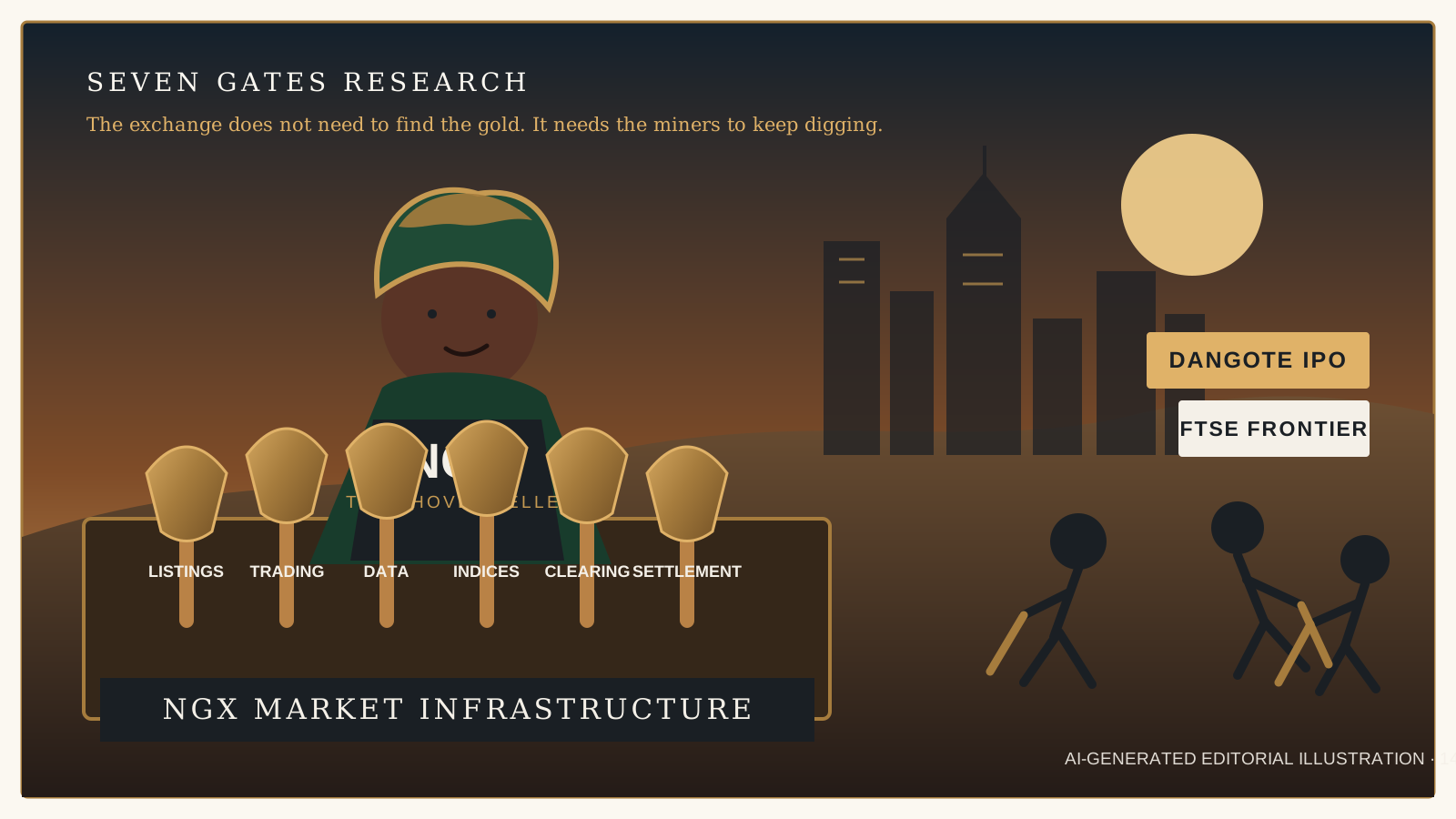
The exchange does not need to find the gold. It needs the miners to keep digging. The better business is the one that also owns the registry, the weighing scale and, eventually, the map.
By The Lokoja Contrarian | 14 September 2026
Data cut-off: 14 September 2026 close | Reference price: ₦149.90
At a Glance
| Item | Seven Gates view |
|---|---|
| Reference price | ₦149.90 |
| Exchange-reported shares outstanding | 2.619bn |
| Potential post-bonus share count | ~2.939bn |
| Equity value, exchange share count | ~₦392.6bn |
| Pro-forma equity value, full bonus denominator | ~₦440.6bn |
| H1 2026 revenue | ₦17.60bn |
| H1 2026 PAT | ₦10.36bn |
| TTM P/E at ₦149.90 | ~26.5x |
| Transaction fees / revenue | 75.8% |
| CSCS ownership | 43.52% |
| Reconstructed 10-year real earnings | ~₦8.74bn p.a. |
| Reconstructed CAPE | ~45x–50x |
| Seven Gates headline CAPE | ~47x |
| Base SOTP | ~₦105–₦120/share |
| Bull SOTP | ~₦150–₦169/share |
| Seven Gates action | HOLD / WAIT |
| Preferred accumulation zone | Below ~₦110 |
| Stronger buy zone | ~₦95–₦100 |
The answer before the sermon
NGX Group is becoming a better company faster than I expected.
Unfortunately, everybody else has noticed.
The share closed at ₦149.90 on 14 September, up from ₦130.10 a week earlier, a 15.2% move in seven days. Nigeria returns to the FTSE Frontier universe on 21 September. On the same day this note was refreshed, Dangote Refinery launched Africa’s largest IPO, offering 4.1 billion shares at ₦525 and seeking roughly ₦2.15 trillion. Reuters says the offer runs to 13 October, with trading expected in late November.
The shovel seller has not merely found a gold rush. One of Africa’s largest miners has arrived at the counter with a purchase order.
That strengthens the business case.
It does not improve the entry price.
My base SOTP remains roughly ₦105–₦120. The bull range is roughly ₦150–₦169. At ₦149.90, the share is already inside the bull range on the exchange-reported denominator and above the conservative bull case if the full bonus denominator is used.
A great business can be worth owning. It does not follow that every price is an invitation.
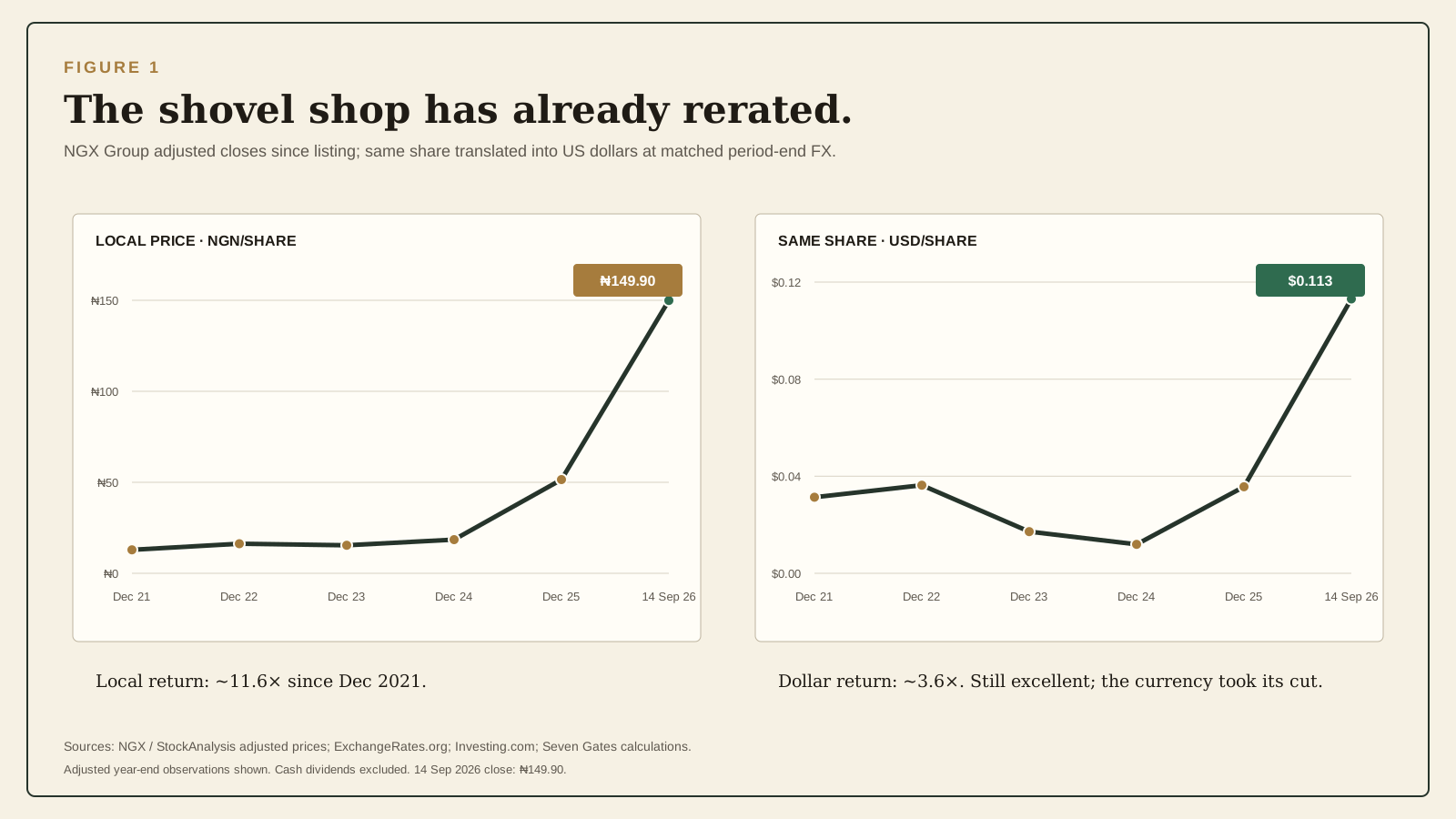
Figure 1. NGX listed in October 2021, so there is no honest ten-year listed-share chart. The figure uses a consistent corporate-action-adjusted series for verified year-end observations and the 14 September 2026 close, then translates the same share into dollars at matched period-end FX. Cash dividends are excluded.
1. The shovel shop
Every gold rush has three reliable characters.
There is the man who knows, with the confidence normally reserved for prophets and WhatsApp investment groups, that the gold is under that hill.
There is the man doing the digging.
And there is somebody at the edge of camp selling shovels to both of them.
Guess who sleeps best.
The prospector may become rich. He may also spend six years discovering granite. The miner may hit a vein, or discover that geological optimism is not recognised by his bank as collateral.
The shovel seller has a simpler business model:
Cash first. Archaeology afterwards.
That is roughly where Nigerian Exchange Group sits today.
Nigeria is doing a lot of prospecting. Equities have rerated. Settlement has moved to T+1. Domestic participation has widened. FTSE Russell has confirmed Nigeria’s return to Frontier Market status from the open on 21 September 2026, after finding no material settlement, operational or funding problems following the move to T+1. NGX Group now has the job of turning international visibility into actual liquidity and capital formation.
And then there is Dangote.
Whether the refinery IPO is cheap, expensive, magnificent or requires another pot of coffee is almost beside the point for the exchange.
NGX gets paid because the argument exists.
So yes, NGX is the lady selling shovels to Nigeria’s gold miners.
Actually, that understates it.
She sells the shovel. She charges when the gold changes hands. Through a 43.52% interest in CSCS, she owns part of the machinery that records who owns the gold after the trade. She sells information about the mine.
And if management gets the next decade right, she may eventually own the map.
Selling shovels is good.
Owning the map is better.
2. Huxley has already seen this movie
There is a quotation often attributed to Aldous Huxley that says the past is the key to the future.
I cannot verify it.
It therefore does not get into a Seven Gates article merely because it sounds expensive.
Huxley wrote something better in A Case of Voluntary Ignorance:
“That men do not learn very much from the lessons of history is the most important of all the lessons that history has to teach.”
NGX is an unusually good company through which to test the proposition.
Go back to 2016.
Nigeria was in recession. Trading activity collapsed. Transaction fees fell 37%. Listing fees fell 41%. The old Nigerian Stock Exchange made about ₦27 million after tax.
Not billion.
Million.
One year later, the I&E FX window reopened a path for foreign portfolio investors. Total income rose 86%. Transaction fees jumped 130%. PAT went from ₦27 million to roughly ₦3.79 billion.
Management understood the lesson. The 2017 annual report said market-services revenues needed to become less correlated with market cycles and, specifically, oil prices. The report reads today like a memo left for the 2026 board.
Fast-forward nine years.
H1 2026 revenue is ₦17.60 billion.
Operating profit is ₦10.62 billion.
PAT is ₦10.36 billion.
A magnificent half year. NGX Group has demonstrated exactly what operating leverage looks like when the market wakes up.
But transaction fees alone were ₦13.34 billion, or 75.8% of revenue.
In H1 2025 the same number was 61.4%. The record year has made the concentration problem larger, not smaller. Proshare makes the point plainly.
The diagnosis from 2017 was right.
The patient is richer.
The cure is unfinished.
Same examination paper. New school year.
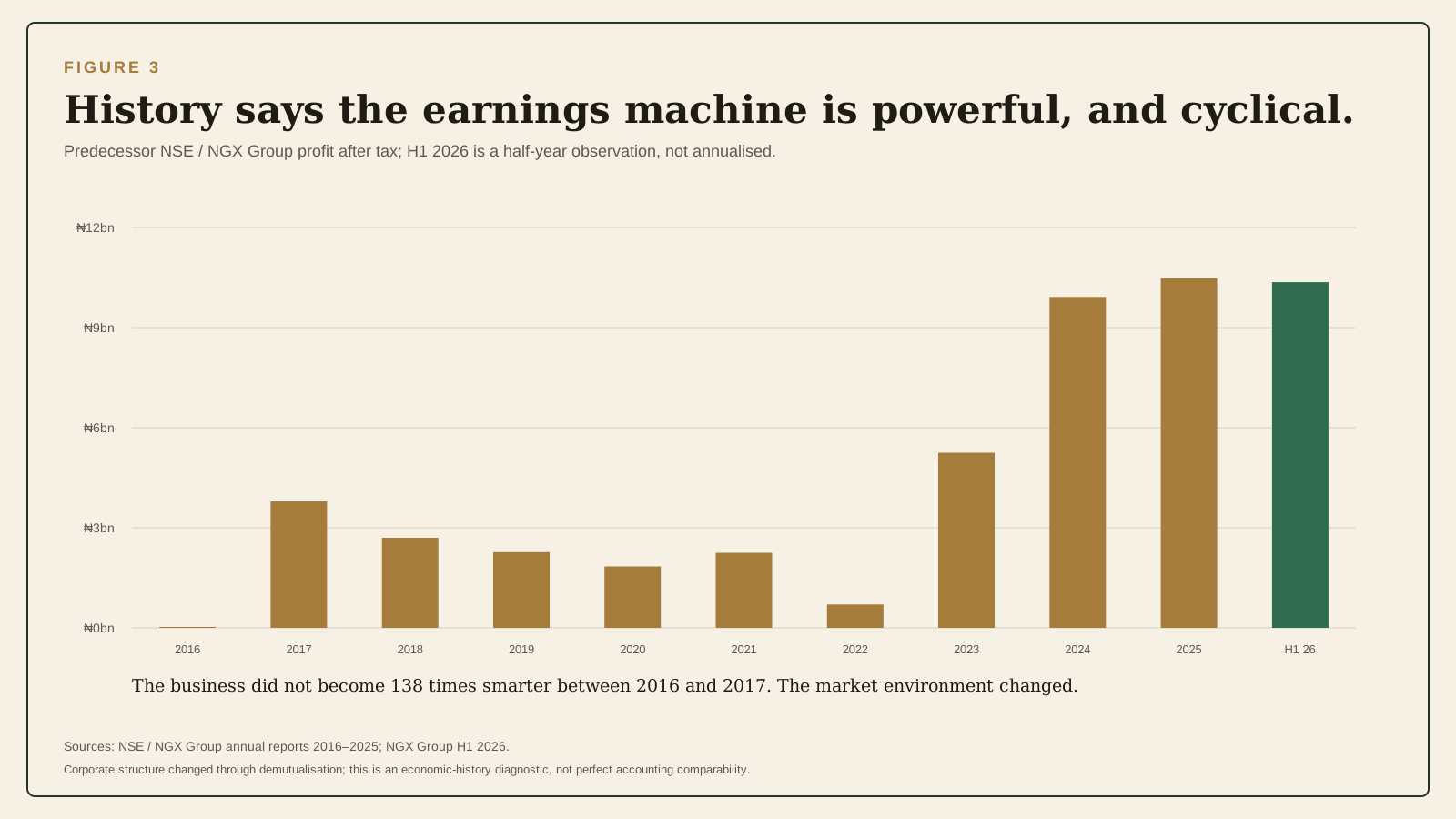
Figure 2. The point is not that the corporate structure stayed unchanged through demutualisation. It did not. The point is that the underlying exchange economics have always been violently sensitive to market conditions.
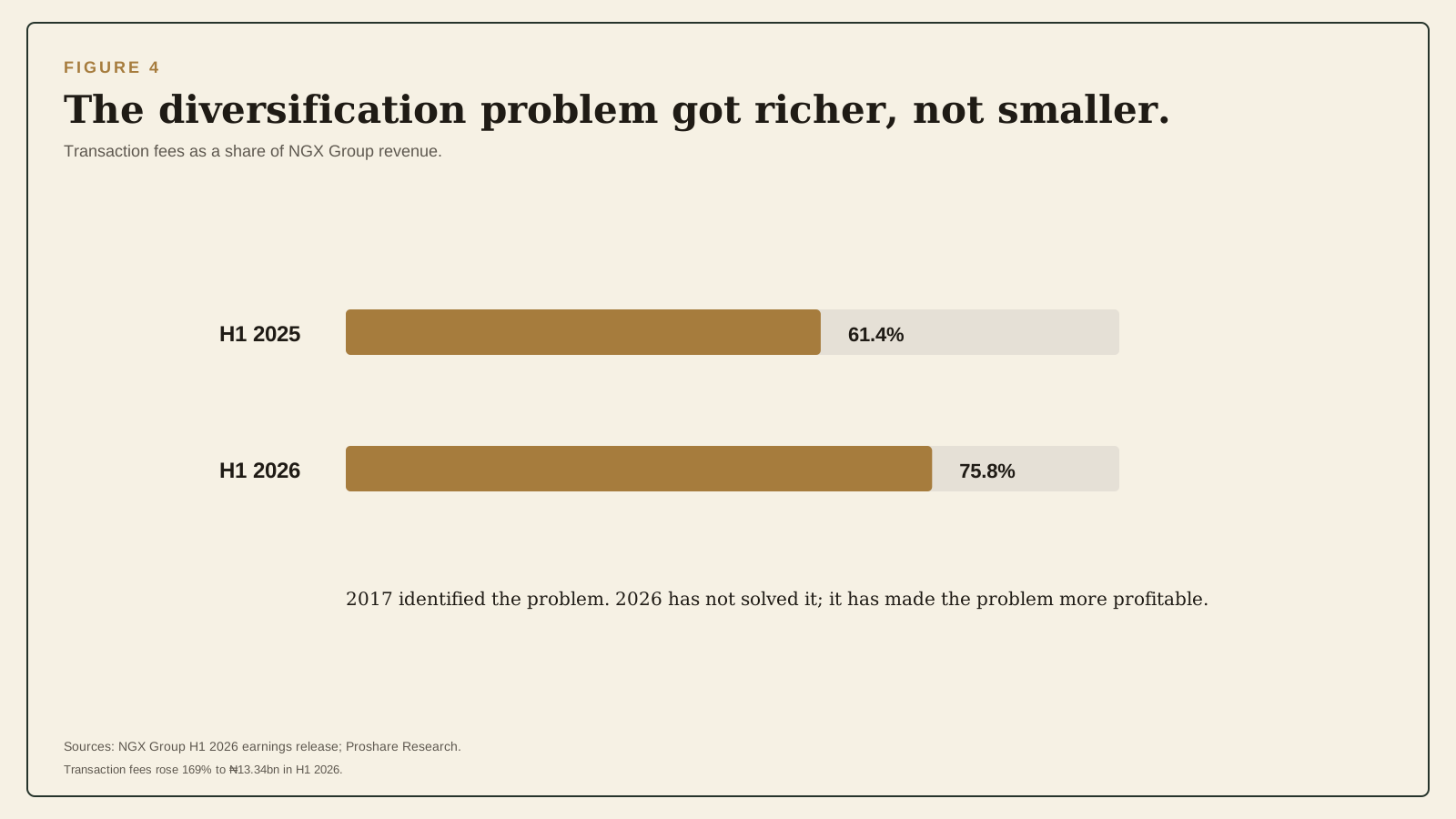
Figure 3. The 2026 earnings surge is real. So is the dependence on trading activity.
3. The naira gets a vote
There is another reason to be careful with heroic Nigerian return charts.
Currency.
A naira chart can tell the truth and still leave out the part of the truth that owns a passport.
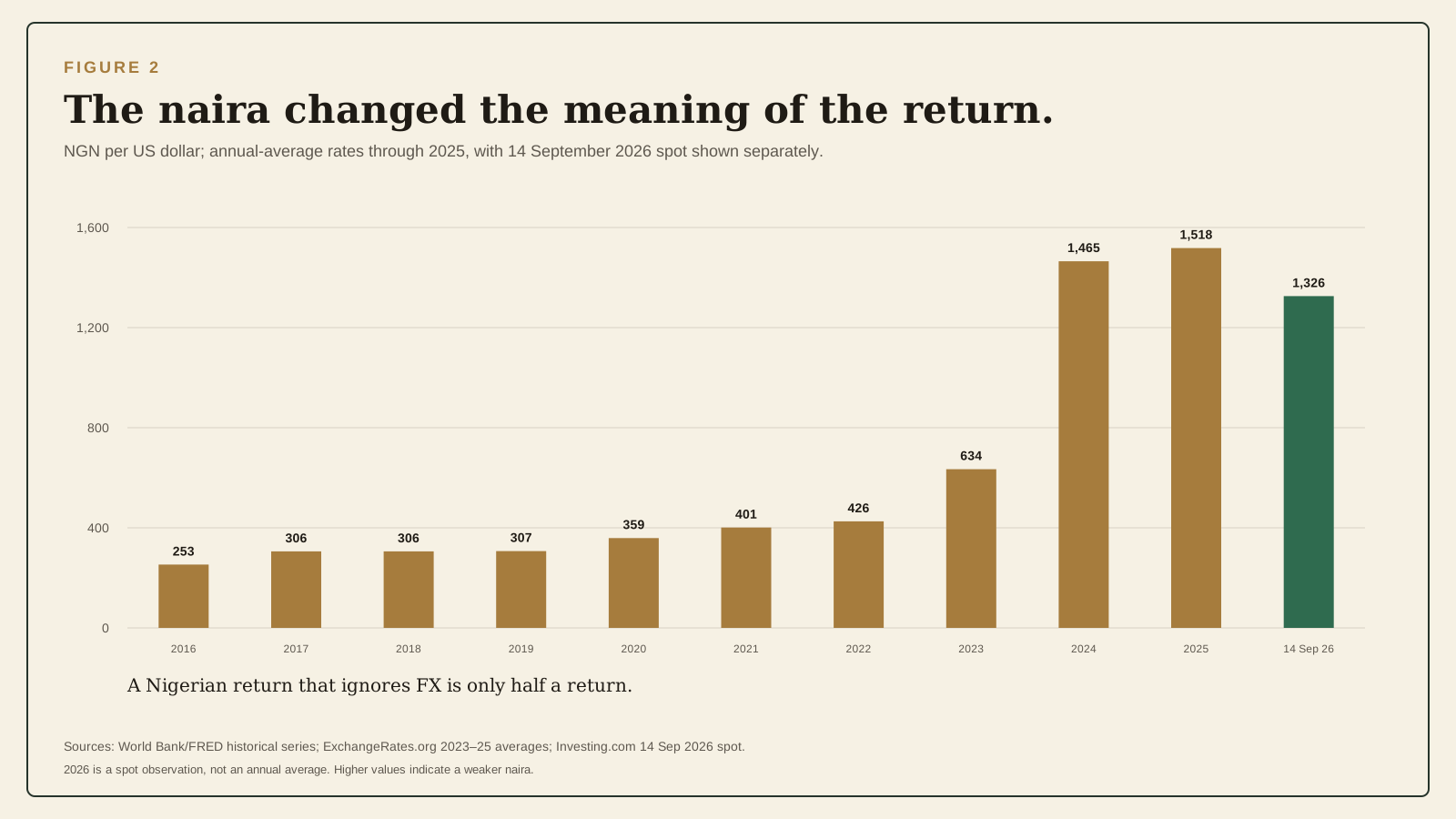
Figure 4. The naira moved from roughly ₦253/$ on a 2016 annual-average basis to around ₦1,500/$ in 2024–25 before strengthening materially in 2026. The 2026 point is spot, not an annual average.
Using a consistent adjusted NGX price series from December 2021, the share moved from about ₦12.92 to ₦149.90.
That is roughly 11.6x in naira.
Translate those same points into dollars using matched period-end FX and the gain is closer to 3.6x.
Still excellent.
But there is a difference between 11.6x and 3.6x large enough to drive a Hilux through.
This matters because Nigerian equities routinely flatter investors in the home currency while inflation and FX conduct a second performance review in the next room.
NGX passes the second review.
Just not with the same score.
4. What the older shovel sellers learned
The most useful comparison is not whether CME beat ICE by a few basis points in 2019.
It is what these companies learned to become.
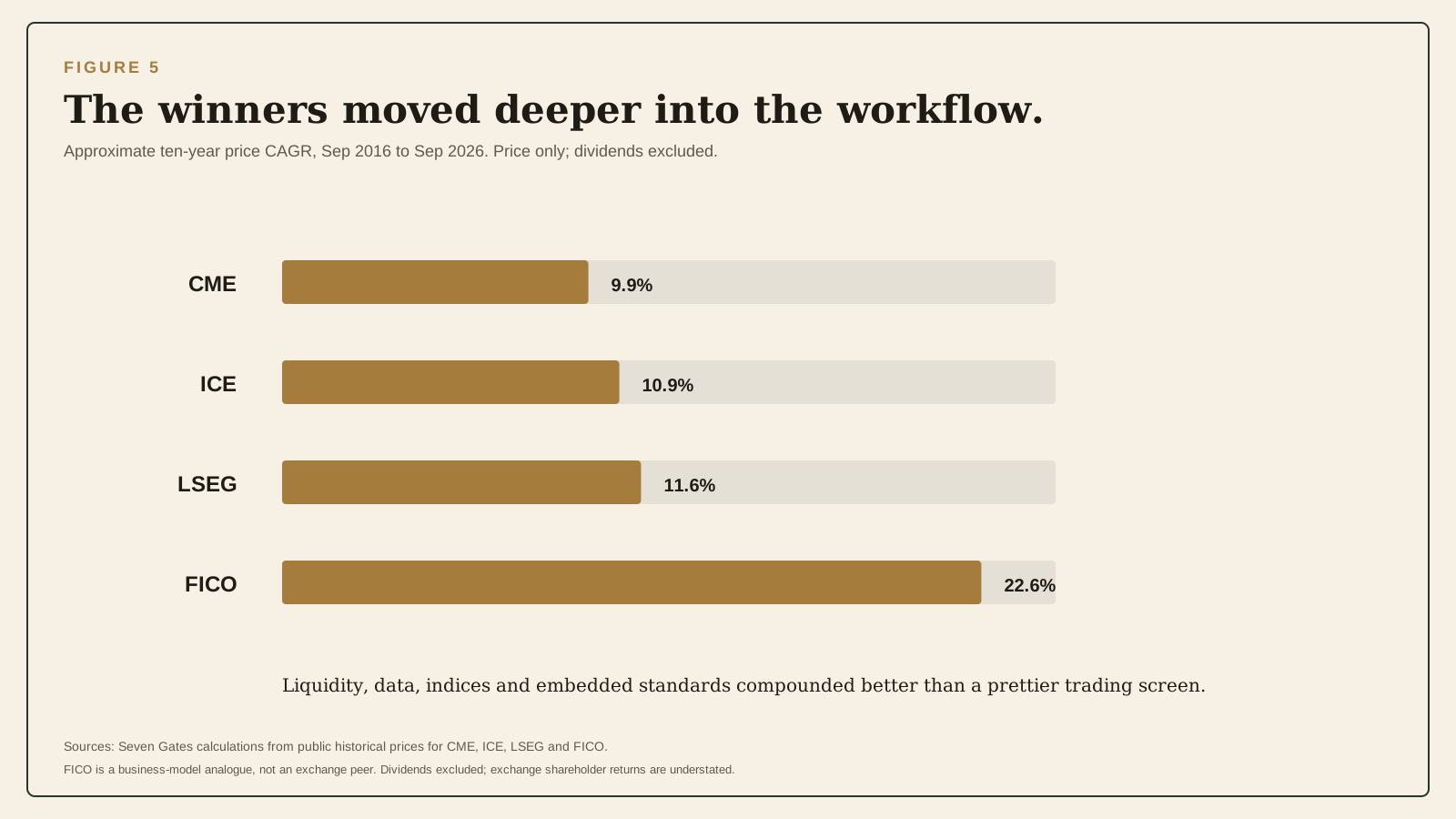
Figure 5. Price-only comparison, approximately September 2016 to September 2026. Dividends are excluded, so the exchange shareholder returns are understated. FICO is deliberately included as a business-model analogue, not a direct peer.
CME learned to make liquidity the product.
Institutions do not use SOFR futures because the website is attractive. They use them because everybody else uses them. Liquidity attracts liquidity. Open interest attracts open interest. That is a network effect with a clearing house attached.
For NGX, this means one genuinely liquid derivative is worth more than twenty products whose deepest market occurs during the launch photography.
Nigeria has obvious risk-transfer problems in FX, rates, equity indices and selected commodities. Build fewer instruments. Make them useful.
ICE learned to sell the toolbox.
Trading. Clearing. Fixed-income data. Reference data. Indices. Connectivity. Mortgage technology.
Not random diversification. Adjacent ownership of the financial workflow.
There is an important difference between own more of the workflow and buy companies.
The two sentences look annoyingly similar in an investment-bank presentation.
They produce very different returns.
LSEG learned that the exchange could become the front door.
Data, analytics, FTSE Russell, clearing, risk intelligence, workflow tools. Calling LSEG merely a stock exchange today is technically defensible in the same way that calling Amazon a bookseller is technically defensible.
Correct, and not very useful.
That is the direction NGX should study most closely.
Then there is FICO.
FICO is not an exchange. That is exactly why it is interesting.
Its economic achievement was to own a number around which other institutions organise themselves. Banks use it. Consumers know it. Systems ingest it. Decisions depend on it.
Once information becomes a standard, the owner stops merely selling data.
It begins charging rent on a language.
NGX has smaller versions of that opportunity in indices, security identifiers, corporate actions, ownership data, free-float records, market calendars, historical fundamentals and machine-readable filings.
The best data product is not the one a customer admires.
It is the one whose disappearance ruins his Tuesday.
5. AI is coming for the screen, not the settlement
Can AI destroy NGX?
Not the interesting parts.
An AI model can analyse a transaction. It cannot give the trade legal settlement finality.
It can summarise a prospectus. The issuer still needs somewhere to list.
It can model collateral. It does not become a recognised clearing institution because it read the rulebook before breakfast.
NGX’s moat is in the boring things: regulation, trust, liquidity concentration, issuer relationships, broker connectivity, surveillance, settlement and post-trade infrastructure.
Boring infrastructure can be extraordinarily valuable.
The weaker moat is the screen.
Dashboards can be copied. Elementary screeners can be copied. Generic market commentary can certainly be copied. The internet is currently producing enough generic market commentary to insulate several medium-sized houses.
AI is not coming for settlement.
It is coming for the interface.
Huxley provides another useful line from Proper Studies:
“Facts do not cease to exist because they are ignored.”
The fact NGX should not ignore is that a prettier data portal is not a long-term moat.
NGX already supplies real-time, end-of-day, reference and historical data products. Its own X-DataPortal and market-data API infrastructure prove that the raw material is already there.
The opportunity is to become the definitive machine-readable record of Nigerian public capital.
Then let Bloomberg, portfolio systems, fintechs and AI agents pay to consume it.
Do not defend yesterday’s screen.
Own tomorrow’s source.
6. CSCS is the interesting bit nobody puts on the billboard
NGX owns 43.52% of Central Securities Clearing System Plc.
That matters.
Trading gets the television graphics.
Post-trade infrastructure gets operations meetings.
I generally prefer businesses where the money lives in the operations meeting.
NGX’s share of profit from equity-accounted investees reached ₦4.14 billion in H1 2026, up 130%, driven mainly by CSCS. NGX Group also received a meaningful dividend from CSCS during the period.
Settlement is only the beginning.
Collateral. Securities lending. Repo. Asset servicing. Margin. Corporate actions.
The deeper NGX and CSCS sit inside the machinery through which Nigerian securities move, the less dependent the group becomes on whether retail investors wake up feeling enthusiastic on a Wednesday.
Trust is boring.
Until somebody needs it.
7. Then CAPE walks in and spoils lunch
At ₦149.90, the ordinary valuation can still be made to look respectable if one annualises the exceptional H1 2026 result.
That is precisely why the reconstructed CAPE is useful.
Across 2016–2025, inflation-adjusted average earnings are roughly ₦8.74 billion a year.
Against the current equity value, reconstructed CAPE is about:
- 44.9x using the exchange-reported 2.619 billion shares; and
- 50.4x using the potential 2.939 billion post-bonus denominator.
The publishing shorthand is therefore:
~47x reconstructed CAPE
This is not a textbook Shiller CAPE. The predecessor NSE had a different ownership structure. Demutualisation changed the corporate architecture. CSCS has become more important. Nigerian CPI has been rebased.
So call it what it is: a Seven Gates normalisation diagnostic.
But do not miss what the number says.
The market is pricing NGX as though 2024–26 is not merely a boom. It is the new business.
Perhaps.
But that sentence is doing a lot of valuation work.
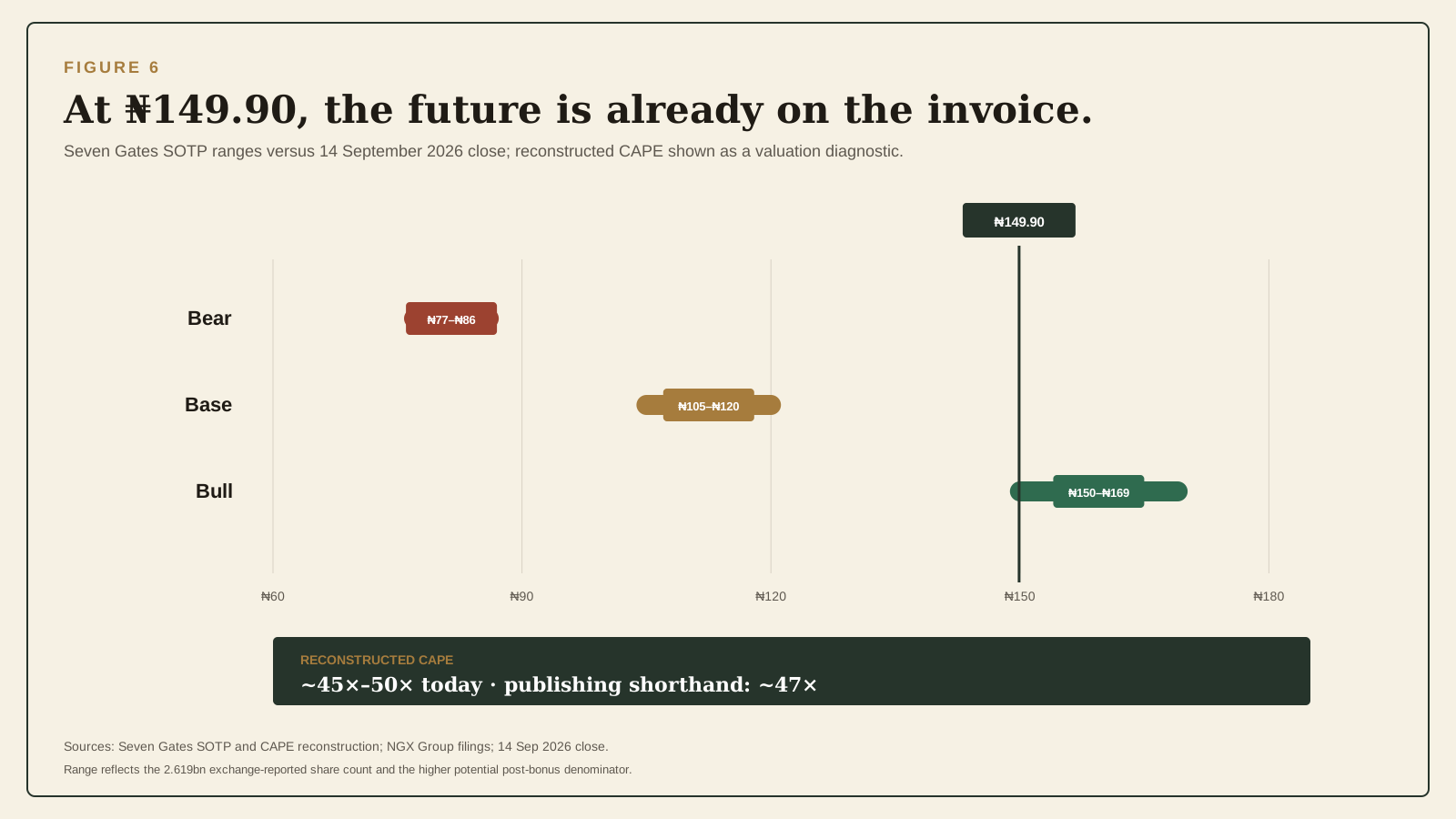
Figure 6. At ₦149.90, the stock is already inside the bull range on the current exchange share count and above the conservative bull case on the higher potential post-bonus denominator.
The SOTP remains:
| ₦bn | Bear | Base | Bull |
|---|---|---|---|
| Core exchange & subsidiaries | 144 | 197 | 279 |
| CSCS / associates | 60 | 84 | 125 |
| Excess liquid assets | 20 | 25 | 30 |
| Clearing / other optionality | 2 | 4 | 8 |
| Equity value | 226 | 310 | 442 |
That converts to roughly ₦105–₦120 in the base case and ₦150–₦169 in the bull case, depending on the final share-count denominator.
The denominator still matters. NGX currently reports roughly 2.619 billion shares outstanding, while shareholders approved the one-for-three bonus issue earlier this year. Until that capital structure is fully reconciled, the sensible thing is to show both cases rather than bury the uncertainty under EPS printed to two decimal places.
Precision without a clean denominator is arithmetic wearing cufflinks.
8. What management should steal
Not copy.
Steal.
From CME, steal the obsession with liquidity. Build fewer derivatives. Make them useful.
From ICE, steal the logic of adjacency. Trading, clearing, data, connectivity, benchmarks. Avoid the corporate disease where every acquisition becomes “strategic” after the cheque clears.
From LSEG, steal the transition from exchange to information infrastructure.
From FICO, steal the ambition to own a standard somebody else cannot conveniently avoid.
For NGX that means more recurring data income, deeper post-trade economics, serious indices and benchmarks, a small number of liquid derivatives and machine-readable Nigerian market data distributed into every institutional workflow that matters.
I would watch one KPI above almost everything else:
What percentage of NGX earnings still exists during a boring market year?
If that number rises steadily, the multiple deserves to rise with it.
If transaction fees remain three-quarters of revenue, we are still looking at an excellent cyclical exchange enjoying an exceptional cycle.
There is nothing wrong with that business.
There is something wrong with paying for LSEG before it becomes one.
The Verdict
NGX owns a very good asset.
Perhaps eventually a great one.
Nigeria needs the infrastructure. The regulatory moat is real. CSCS is valuable. Current operating leverage is extraordinary. Dangote’s IPO and Frontier re-entry are almost laboratory-perfect conditions for showing what an exchange earns when capital formation wakes up.
AI is not the existential threat.
Complacency is.
NGX identified its central weakness in 2017: too much dependence on market activity.
Nine years later, transaction fees account for 75.8% of revenue.
Huxley would probably have enjoyed that.
At ₦149.90, I would not chase it.
HOLD / WAIT
Below roughly ₦110, I become interested again.
Around ₦95–₦100, assuming the operating thesis is intact, the margin of safety becomes much more attractive.
Above today’s level, I want proof that the company is becoming something different: more data, more indices, more post-trade, more recurring revenue and more infrastructure economics that survive when the trading screens become quiet.
Because the great outcome is not that NGX becomes a bigger stock exchange.
It is that ten years from now, calling it a stock exchange sounds slightly quaint.
The ideal NGX gets paid when a company raises capital.
When the shares trade.
When they settle.
When collateral moves.
When an index is licensed.
When data enters a portfolio system.
When an AI agent in London asks for the definitive Nigerian corporate-action record at three in the morning.
The lady should keep selling shovels.
But the truly wonderful business begins when she owns the road to the mine, the weighing scale, the registry and the map.
At ₦149.90, the market has noticed the shovel shop.
It has also started charging us for the railway.
Sources and methodology
Current share price and adjusted price history: Investing.com reports a 14 September 2026 close of ₦149.90. Historical adjusted year-end NGX prices are taken from StockAnalysis / S&P Global Market Intelligence through 2025. NGX Group’s own market page remains the primary reference for issuer identity and exchange-reported shares outstanding.
FX: Annual-average NGN/USD observations through 2023 use the FRED-hosted Penn World Table series. 2024–25 annual averages and matched period-end rates use FocusEconomics/Macrobond. The 14 September 2026 spot observation uses Investing.com. The USD share-price translation is price-only and excludes dividends.
CAPE: Seven Gates reconstruction using consolidated predecessor-NSE / NGX Group PAT for 2016–2025, restated into comparable purchasing power using Nigerian CPI and averaged. The resulting real earnings base of approximately ₦8.74 billion is a normalisation tool, not a vendor-supplied Shiller CAPE. Demutualisation, changing group structure and the growing contribution from CSCS limit strict comparability.
Peer returns: Approximate price-only comparison from September 2016 to September 2026. Cash dividends are excluded. FICO is used as a business-model analogue rather than a direct exchange peer.
Dangote Refinery IPO: Reuters, 14 September 2026.
FTSE Frontier reclassification: NGX Group, 27 August 2026.
Huxley quotations: “That men do not learn very much...” is from A Case of Voluntary Ignorance. “Facts do not cease to exist because they are ignored” is from Proper Studies (1927). The frequently attributed phrase “the past is the key to the future” is not used because Seven Gates could not verify it as Huxley.