SEVEN GATES RESEARCH · EQUITY RESEARCH
Zenith Bank 2026: The Red Tie Has to Earn Its Keep
Zenith has solved the recapitalisation problem. At roughly book value, the enlarged equity base now has to restore per-share compounding.

The recapitalisation is done. The harder assignment is turning a much larger equity base into renewed per-share compounding.
Zenith after recapitalisation: bigger capital, higher expectations. AI-generated editorial illustration, not documentary evidence.
I remember when, around 2006–2008, you needed at least ₦50,000 before Zenith Bank would even entertain your dreams of becoming a customer. And it had to be a current account. Zenith was not exactly standing outside the branch handing out forms and begging for deposits.
It was a useful sort of arrogance. The white buildings, red ties and polished marble said who the bank believed it was. Then banking changed. GTBank made retail fashionable. Smartphones removed the branch from the centre of the relationship. Fintechs discovered Nigerians would move money without first admiring the architecture.
Strategy does not have to be permanent. Relevance has a much shorter expiry date.
Zenith adapted. In 2026, the strategic question has moved again. Capital is no longer scarce. The bank raised it. Now the enlarged balance sheet must earn its keep.
Zenith at a glance
Reference price and valuation as at 4 September 2026 close.
The Seven Gates view
ACCUMULATE. Fair value: ₦145–₦160. Stronger buying interest below ₦115. Zenith remains a high-quality franchise, but at roughly book value the easy bargain has gone. The next leg must be earned through stronger per-share earnings and returns on the new capital.
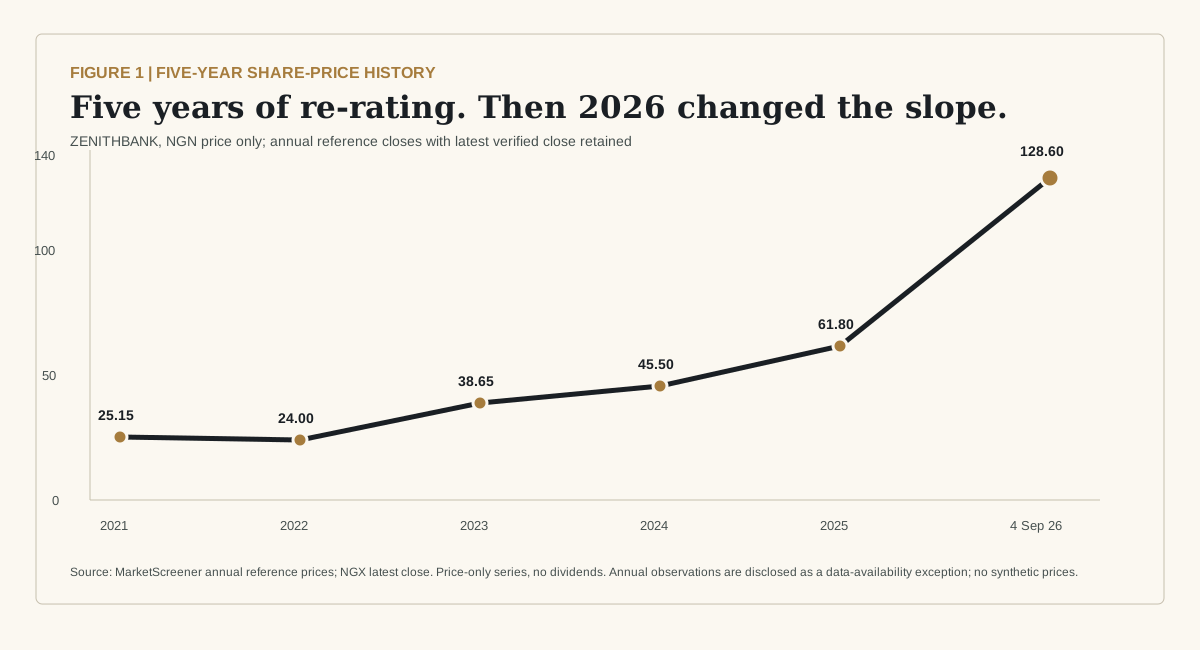
1. More capital. More owners. The same dinner.
The uncomfortable fact comes first. Zenith raised capital and increased its share count from roughly 31.4 billion to 41.1 billion, about 31%. Yet FY2025 profit after tax rose only 0.7% to around ₦1.04 trillion. EPS fell from ₦32.87 to ₦25.32.
The recapitalisation was necessary. It also changed the denominator. Shareholders do not own the press release saying profit crossed a trillion naira. They own the earnings left for each share after the new owners have joined the table.
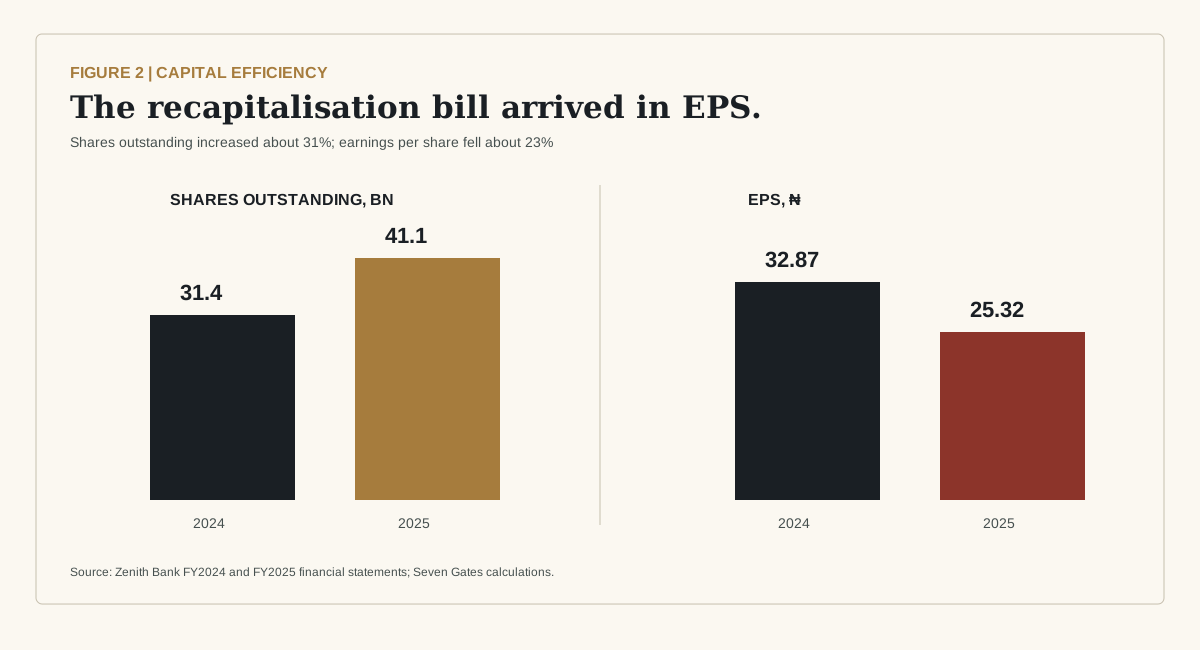
The burden of proof is therefore straightforward: can Zenith put the new equity to work at returns high enough to restore per-share compounding?
2. Q1 says the engine works. It does not yet say it is humming.
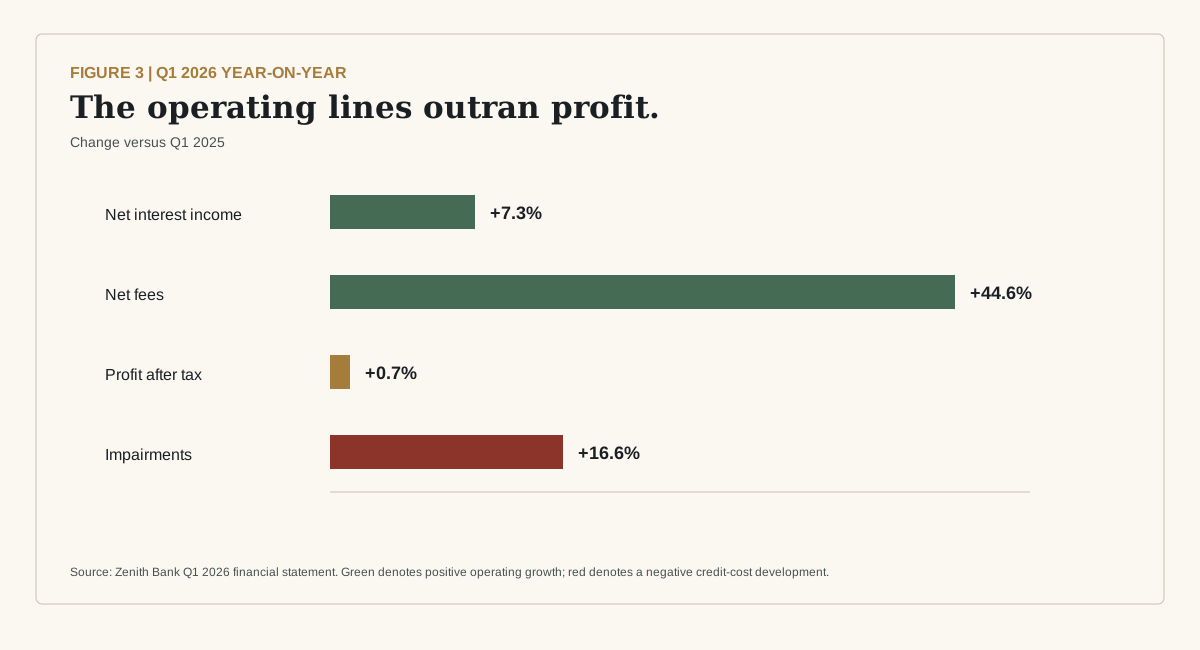
Q1 2026 net interest income rose 7.3% to about ₦634 billion. Net fees jumped 44.6% to roughly ₦81 billion. Those are the lines you want moving in a bank trying to make more from its franchise.
PAT, however, increased only 0.7% to about ₦314 billion. Impairment charges rose 16.6% to roughly ₦57.6 billion. In banking, credit cost is where optimism eventually meets the borrower who has stopped returning calls.
Zenith's audited H1 2026 accounts were approved by the board on 29 July but remain subject to CBN approval before publication. The bank has an NGX extension and expects release on or before 9 October 2026. Until then, Q1 is the latest public operating dataset.
3. The reserves trap, Kenya and the index buyer
At March, Zenith reported about ₦5.89 trillion in mandatory reserve deposits with the CBN. That is larger than Zenith's present market capitalisation. The money is not lost. It is simply not ordinary commercially deployable liquidity, which is an important distinction when admiring the size of a Nigerian bank's balance sheet.
April brought a different kind of optionality: Zenith completed the 100% acquisition of Paramount Bank Kenya. The sensible strategic case is to follow corporate customers across African trade corridors and grow fee income without losing the underwriting culture that built the franchise. The less sensible version is to collect flags in reception. We will know which one management has chosen when the returns arrive.
There is also a market-structure catalyst. FTSE Russell has confirmed Nigeria's return to Frontier Market status from 21 September 2026. Zenith's scale and liquidity make benchmark-related demand worth watching. That is a flow catalyst, not an intrinsic-value argument.
4. At book value, reputation has to work for a living
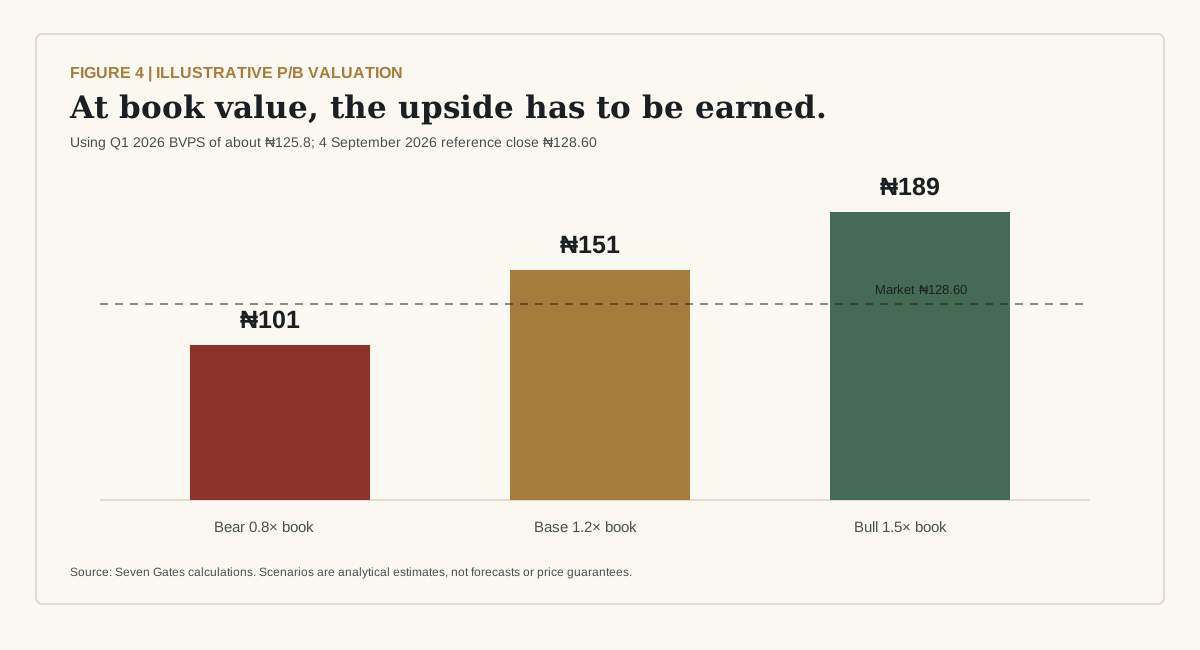
At ₦128.60, Zenith trades at about 1.02 times Q1 book value and roughly 5.1 times FY2025 earnings. By global standards, 5 times earnings sounds cheap. Nigeria is the part of the sentence doing the work.
A crude but useful P/B framework puts the bear case around ₦101 at 0.8 times book, the base case around ₦151 at 1.2 times, and the bull case around ₦189 at 1.5 times.
What each case requires
EPS dilution persists; credit costs rise; the market discounts book.
ROE stays above 20%; fee income compounds; asset quality holds.
EPS reaccelerates; new capital earns well; Kenya contributes useful returns.
The strongest argument against my view is simple. If rates normalise faster than expected, credit costs rise and the enlarged capital base continues producing anaemic per-share growth, 1 times book may prove a ceiling rather than a floor. That would make today's apparent cheapness considerably less interesting.
My preferred evidence for changing the view upward is equally simple: stronger EPS growth, stable asset quality and a sustained ROE above 20% on the enlarged equity base. If those three arrive together, Zenith deserves a higher multiple.
Zenith remains a very good bank. At ₦128.60, the market is simply no longer giving the white building away.
At ₦105, you bought the building and some furniture came free.
At today's reference price, the estate agent has arrived.
Sources and methodology
- Zenith Bank Plc FY2025 Annual Report and audited financial statements.
- Zenith Bank Plc Q1 2026 interim financial statement.
- Nigerian Exchange market data: 4 September 2026 close of ₦128.60; 41.07 billion shares outstanding.
- Zenith Bank announcement on H1 2026 reporting extension, August 2026.
- Zenith Bank / Central Bank of Kenya announcements on Paramount Bank Kenya completion, April 2026.
- FTSE Russell / NGX announcements on Nigeria's Frontier Market reclassification effective 21 September 2026.
- MarketScreener annual reference prices used for the five-year price figure. Price only, no dividends. The annual sampling frequency is disclosed because a verified daily or weekly full-span series was not available in the publication workflow; no missing prices were interpolated.
Disclaimer
This publication is provided for informational and educational purposes only. It does not constitute financial, investment, tax, legal, or other professional advice, nor does it constitute a recommendation, offer, solicitation, or invitation to buy, sell, or hold any security, financial instrument, or investment. The analysis may contain opinions, estimates, assumptions, forecasts and forward-looking statements based on information considered reliable at the time of publication. Such views may change without notice, and actual outcomes may differ materially. Investing involves risk, including the possible loss of principal. Readers should conduct their own independent research, verify the information presented, consider their individual circumstances and risk tolerance, and obtain advice from appropriately qualified professional advisers before making any investment decision. Seven Gates Research accepts no responsibility for investment decisions made solely on the basis of this publication.