SEVEN GATES DAILY BRIEF
Binance has funded the loss; it has not explained the breach
Binance promises to absorb a $6.3 billion theft, Nigerian troops repel two base attacks, AI shares are repriced, a Fed official urges an early rate rise and civilians die in Ethiopia.
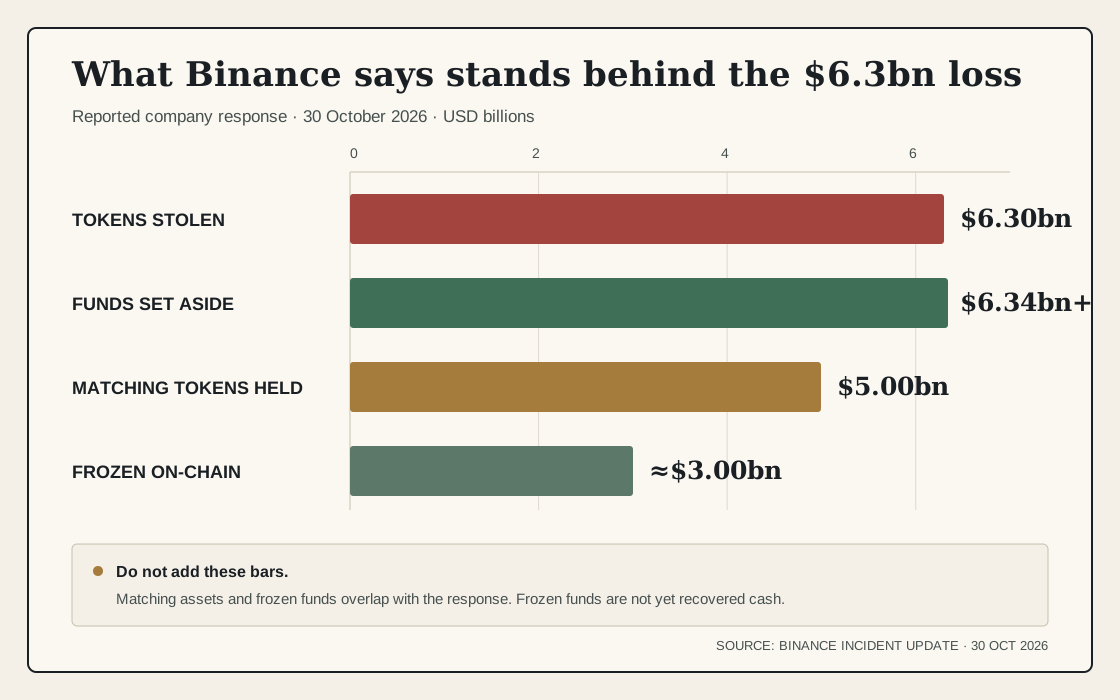
Binance says it can absorb the largest loss ever reported by a crypto exchange. That is evidence of financial capacity. It is not yet evidence that the breach is understood, that every liability is fully backed or that withdrawals can resume safely.
1. Binance has covered the headline amount, with the security account unfinished
Binance said attackers removed about $6.3 billion of tokens from hot wallets beginning on 29 October. It has set aside more than $6.34 billion, including $5 billion in the affected tokens, and says roughly $3 billion has been frozen on-chain. Withdrawals remain suspended while checks continue.
The company says users will bear no loss. Its next tests are operational and verifiable: restore withdrawals, publish the promised proof-of-reserves result by 2 November, and disclose a credible incident sequence. Binance says investigators found more intrusion points than the initially suspected compromised laptop and no evidence that private keys leaked. Those are preliminary findings.
Nigeria has one of the world's most active crypto markets. Users should treat exchange solvency, asset segregation, withdrawal access and proof of reserves as separate questions. A balance visible on an app is a claim on an intermediary until it can move.
Sources: Binance incident update, 30 October; Reuters, 30 October.
2. Two attacks on Nigerian bases show the insurgency still has initiative
Nigerian troops backed by aircraft repelled overnight attacks at Bitta in Borno State and a military training school in Buni Yadi, Yobe State, according to the military. It reported 48 insurgents killed, one soldier killed and two lightly wounded. The enemy casualty figure has not been independently verified.
The immediate tactical result was defensive success. The wider warning is that Boko Haram and ISWAP can still organise simultaneous pressure across two states after 17 years of war. The useful evidence now is attack frequency, weapons captured, military losses and whether routes around the two bases remain open to civilians and commerce.
Source: Reuters, 30 October.
3. The AI trade reached the price-discovery stage
The Nasdaq Composite fell 2.86% on Friday, while the semiconductor index lost 7.2%. Intel dropped 28.6% even after reporting 21% revenue growth, as its outlook and cash demands joined investor concern about Amazon and other large AI spenders.
This is a repricing of execution risk rather than proof that AI demand has disappeared. The test has moved from revenue growth to capital efficiency, depreciation and cash conversion. Nigerian technology firms face a smaller version of the same discipline: capital will favour products that monetise quickly over infrastructure promises with unclear dollar returns.
Sources: Nasdaq official index data, 30 October; Intel results, 29 October; Reuters market close, 30 October.
4. A Fed official wants the next rate increase soon
St Louis Fed President Alberto Musalem said additional monetary tightening would be necessary “soon”, arguing that smaller early moves could be less disruptive than a larger response later. The Fed held rates this week, so the speech is one policymaker's view rather than a committee decision.
For Nigeria, another US increase would support dollar yields and raise the hurdle for eurobond demand, portfolio flows and naira assets. December payroll and inflation evidence will matter more than a single speech, but the direction of risk is now explicit.
Source: Federal Reserve Bank of St Louis, 30 October.
5. A displacement camp in Ethiopia was struck repeatedly
Drone strikes killed at least 15 people, including five children, at the Jari 2 camp in Ethiopia's Amhara region, according to people involved in rescue work. A local official said 36 people were being treated. The camp houses more than 1,700 displaced people. The attacker and motive remain unknown.
The absence of attribution is not a reason to dilute the human fact. Civilians already displaced by conflict were hit where they had sought safety. An independent investigation, protected access for relief workers and a halt to attacks around displacement sites are the minimum next steps.
Sources: Reuters, 30 October; United Nations, 10 October.
Three numbers worth remembering
- $6.3 billion: Binance's reported hot-wallet loss.
- 48: insurgents Nigeria's military says it killed after two base attacks.
- 2.86%: Friday's fall in the Nasdaq Composite.
What could change everything?
Binance's proof of reserves and post-mortem could validate or weaken its account. Independently verified losses and attack frequency would clarify Nigeria's security trend. A rebound in cash conversion could steady AI valuations. Softer US inflation could delay a Fed increase. In Ethiopia, credible attribution and a protected humanitarian corridor would change both the legal and regional stakes.
Prepared for 31 October 2026 using information available by 6:00 a.m. London. Official and company claims are attributed; calculations, Nigerian transmission and judgements are Seven Gates analysis.