SEVEN GATES DAILY BRIEF
Oil crossed $104; expensive capital found a second reason to hesitate
A fresh oil spike tightened the inflation constraint, AI financing met a less forgiving market and Nigeria's stronger public revenues still bought too little human capital.
Brent closed above $104 even after Donald Trump ruled out a US attack on Iran before the midterm elections. That is the morning's warning. Promises can pause one military risk; they cannot instantly reopen Hormuz, restore hurricane-shut production or make debt cheap again. The consequence is a harsher test for governments and companies: show that higher revenue, investment and borrowing produce something useful before the next shock arrives.
1. Oil rose 4% because two supply risks arrived together
Brent settled 4.1% higher at $104.28 on Thursday after attacks on shipping in the Strait of Hormuz and precautionary shutdowns ahead of Hurricane Isaias. US regulators estimated that 1.283 million barrels a day, or 62.89% of Gulf of Mexico oil output, had been shut in. Trump said the US would not attack Iran before 3 November and described talks as productive, but Iran is still reviewing a proposal to reopen Hormuz.
The distinction is physical. A political pause is not restored supply. Nigeria gains export revenue from dearer crude, but existing forward sales dilute the fiscal upside, while imported refined products transmit the price shock into transport, food and industry.
Sources: Reuters, 8 October · US Marine Minerals Administration, 8 October · US Treasury, 8 October.
2. The AI trade met the price of its own ambition
The Nasdaq fell 1.25% and the semiconductor index lost 3.4% after a report that OpenAI's annualised revenue was $20 billion below an earlier signal. The accounting comparison is disputed, but the market reaction reached the larger issue: Broadcom, Oracle and other infrastructure suppliers may need tens of billions of dollars in new financing while long-term sovereign yields remain near multi-decade highs.
This is not an obituary for AI demand. It is a change in the hurdle rate. Investors are beginning to separate useful adoption from circular financing and promised capacity. The next results season must show cash economics, not merely compute contracted.
Sources: Reuters global markets, 9 October · Reuters US markets, 8 October.
3. Nigeria's public finances improved faster than public services
The World Bank says real GDP grew 4.2% in the first half, up from 3.9% a year earlier, while the current-account surplus reached $12 billion and reserves exceeded $54 billion in September. It projects average growth of 4.4% through 2028 if reforms continue.
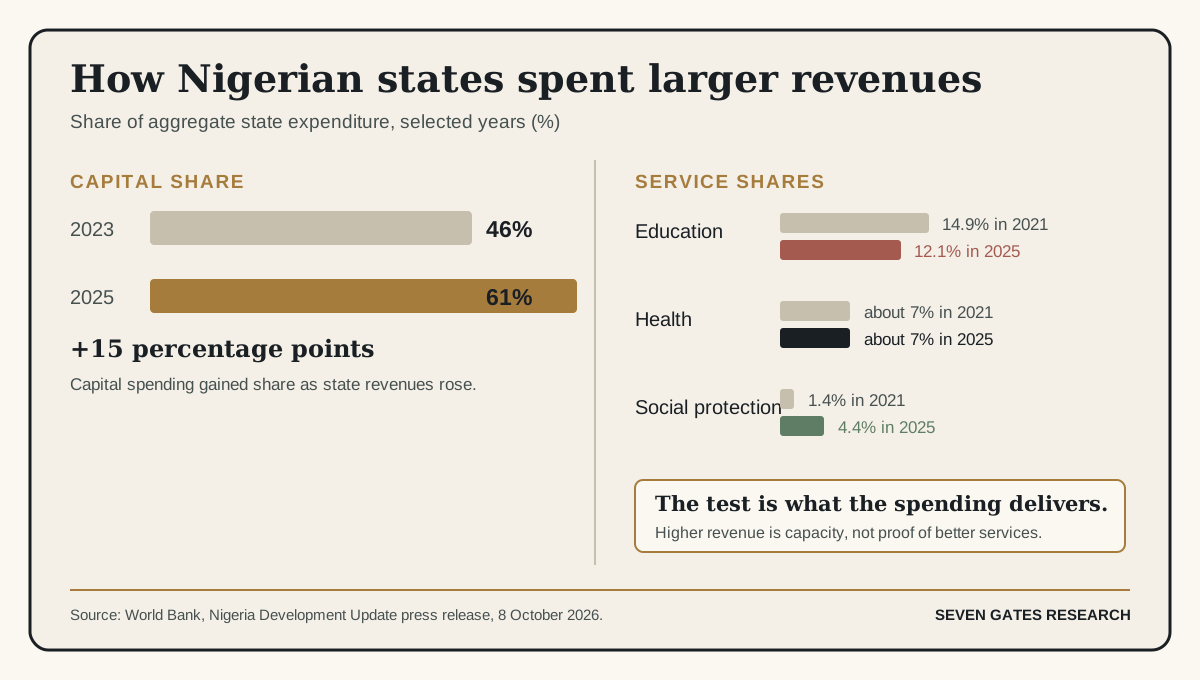
The harder finding sits below the headline. Aggregate state revenues rose 93% in real terms between 2023 and 2025, and capital spending's share increased from 46% to 61%. Yet education fell from 14.9% of spending in 2021 to 12.1% in 2025; health stayed near 7%. More fiscal space is real. Whether it becomes classrooms, clinics and jobs is now an allocation question rather than a revenue excuse.
Source: World Bank, 8 October.
4. US tariffs left a measurable inflation bill
New York Fed researchers estimate that about 26% of the 2025 tariff increase passed through to consumer prices after one year. By February 2026, tariffs had added 2.9 percentage points to US goods-price inflation; without them, goods prices would have fallen slightly.
The direct effect should fade as base comparisons change. The policy lesson remains: tariffs tax domestic buyers through both imports and locally produced substitutes. For Nigeria, persistent US inflation keeps Treasury yields and dollar funding expensive even when the naira itself is calm.
Source: Federal Reserve Bank of New York, 6 October.
5. Google put one agent across the office suite
Google Cloud introduced a Gemini agent that can answer questions, perform knowledge work, create media and run code across Gmail, Drive, Docs, Sheets, Chat and Calendar. Google says nearly 80% of its cloud customers use its AI products and almost 90% of the Fortune 100 use Gemini Enterprise. Those are vendor claims, not evidence of realised productivity.
The consequential feature is shared identity and permissions across applications. Nigerian firms considering agents should judge the product by auditability, data residency, error recovery and labour saved. A universal interface also creates a universal failure point if access controls are careless.
Sources: Google Cloud, 8 October · Reuters, 8 October.
Three numbers worth remembering
- $104.28: Thursday's Brent close after a 4.1% rise.
- 61%: capital spending's share of aggregate Nigerian state expenditure in 2025.
- 2.9 percentage points: estimated tariff contribution to US goods inflation by February 2026.
What could change everything?
Verified tanker transit through Hormuz would matter more than another negotiating adjective. Rapid restoration of US Gulf output would remove the weather premium. Nigeria's state budgets must show whether capital spending improves services rather than only structures. For AI, the decisive evidence is revenue collected and cash retained after infrastructure costs, not another financing announcement.
Prepared for 9 October 2026 from sources published or updated through 9 October, 5:45 a.m. London time. Company claims are attributed; transmission mechanisms and judgements are Seven Gates analysis.