SEVEN GATES DAILY BRIEF
Ukraine's energy grid is struck; diesel reserves move faster
Russia's latest attack killed at least 32 people, the IEA accelerated emergency oil releases, Nigerian Treasury-bill demand crowded into one year and US inflation expectations rose.
Russia's latest mass attack on Ukraine killed at least 32 people, including children, and damaged homes, industrial sites and energy infrastructure. That human loss comes first. The economic consequence follows: two wars are now damaging refineries, electricity systems and transport routes at the same time. Governments can release stored fuel. They cannot replenish lives, grids or refining capacity on the same timetable.
1. Russia's strike killed at least 32 people
Ukraine said Russia launched 70 missiles and dozens of drones overnight on 7 October. The heaviest loss was in Pryluky, where a missile destroyed part of a five-storey residential building. By Thursday morning, the national death toll had reached at least 32 and about 100 people had been injured. Russia said it targeted military-industrial facilities.
Ukraine reported intercepting just over 80% of 46 jet-powered drones, up from 50% to 60% in recent weeks, but ballistic missiles remain the harder problem. The direct need is air defence. The wider risk is cumulative damage to power and industrial capacity before winter, plus further Ukrainian attacks on Russian energy assets in response.
Sources: Reuters, updated 8 October · President of Ukraine, 7 October.
2. The IEA is accelerating emergency releases and prioritising diesel
IEA members agreed on 7 October to complete their March stock release faster and give diesel priority where possible. About 325 million barrels have already been released. A further 100 million barrels pledged but not yet delivered could now reach the market sooner. Members still hold about 1.1 billion barrels of public emergency stocks, including more than 200 million barrels of diesel.
This is acceleration, not a fresh 100-million-barrel commitment. That matters because crude availability and usable refined products are different constraints. Nigeria produces crude but imports and prices substantial refined-product exposure against global markets. Faster diesel relief could reduce pressure on haulage, generators, food distribution and industrial costs more directly than another crude headline.
Source: International Energy Agency, 7 October.
3. Nigerian Treasury-bill demand crowded into the 364-day tenor
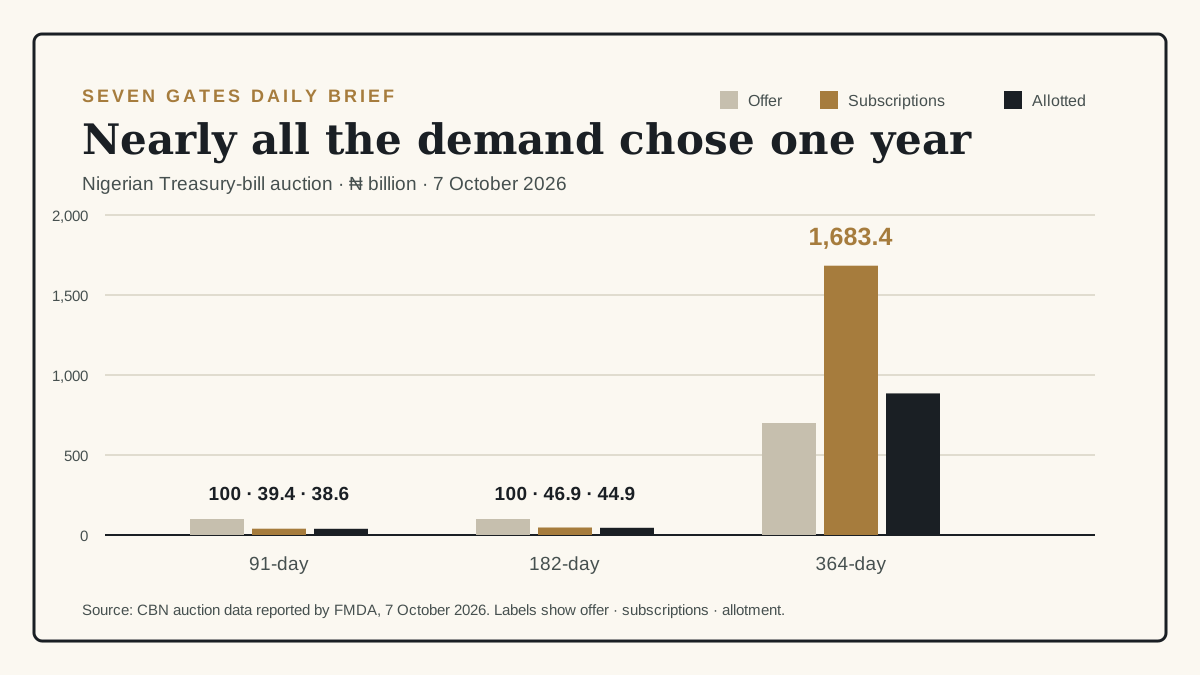
Nigeria offered ₦900 billion of Treasury bills and received about ₦1.77 trillion of bids. The aggregate looks comfortable. The chart shows the qualification: ₦1.683 trillion, or roughly 95% of subscriptions, went to the 364-day bill. The 91-day and 182-day offers were both undersubscribed.
The DMO allotted ₦968.47 billion, including ₦885 billion at one year. The 364-day stop rate slipped four basis points to 15.85%, only 35 basis points above the 91-day rate. Investors are accepting duration after the MPR cut, while government is refinancing more cheaply. But the concentration also says liquidity is selective. It does not describe equal confidence across the curve.
Sources: FMDA auction analysis, 7 October · Afronomics CBN history, retrieved 8 October.
4. The Fed's unanimous hike concealed a real argument
Minutes of the September meeting show officials agreed to lift the federal-funds range to 3.75% to 4.00%, but differed over whether energy inflation or broader demand justified it. New York Fed survey data published Wednesday sharpened the problem: one-year household inflation expectations rose from 3.6% to 3.9%, the highest since May 2023, while five-year expectations stayed at 3.0%.
For Nigeria, a slower US hiking path would help at the margin. Persistently high Treasury yields still set a demanding floor for Eurobond refinancing and dollar capital. A pause is not cheap money.
Sources: Federal Reserve minutes, released 7 October · New York Fed survey, 7 October.
5. Anthropic cut the cost of its small model sharply
Anthropic launched Claude Haiku 5.5 for high-volume tasks such as classification, summaries and database queries. The company says average running cost is about 75% lower than Haiku 4.5; input pricing starts at $0.10 per million tokens for prompts up to 100,000 tokens. Its benchmark and safety claims remain vendor-reported.
For Nigerian firms, the useful change is unit economics. Cheaper competent models widen the set of customer-service, document-processing and compliance jobs that can clear a commercial hurdle. Electricity, connectivity, data quality and testing remain the local costs that a lower token price does not remove.
Source: Anthropic, 7 October.
Three numbers worth remembering
- 32: minimum reported deaths in Russia's 7 October attack on Ukraine.
- 100 million barrels: pledged IEA oil stocks still to reach the market.
- 95%: approximate share of Nigerian Treasury-bill subscriptions directed to the 364-day tenor.
What could change everything?
Further strikes on Ukrainian or Russian energy assets could outrun emergency-stock relief. A sustained fall in diesel prices would show that faster releases are reaching the constrained part of the market. Nigeria's next bill auction will test whether demand remains concentrated at one year. In the United States, September inflation data will decide whether the Fed's internal disagreement becomes a policy pause or another increase.
Prepared for 8 October 2026 from sources published or updated through 8 October, 5:45 a.m. London time. Company claims are attributed; transmission mechanisms and judgements are Seven Gates analysis.