SEVEN GATES DAILY BRIEF
Oil is cheaper. Money is not.
Japan raises rates while Britain redraws its bond exit; Saudi repairs remain uncertain, UN investigators document grave abuses, Nigeria's IPO tests its financial plumbing, and AI returns to the capital markets.
Oil is retreating from its latest peak. Central banks are not retreating with it. The distinction matters: a cheaper cargo this morning does not undo the higher financing cost attached to tomorrow's investment.
1. Japan tightens; Britain changes the bond arithmetic
The Bank of Japan voted 7–2 to raise its overnight-rate target to 1.25%, effective 24 September. Its diagnosis links expensive oil, a weaker yen and AI-related demand to wholesale prices now spilling into consumer inflation. This is more than an energy-price wobble: wage and pricing behaviour are changing too.
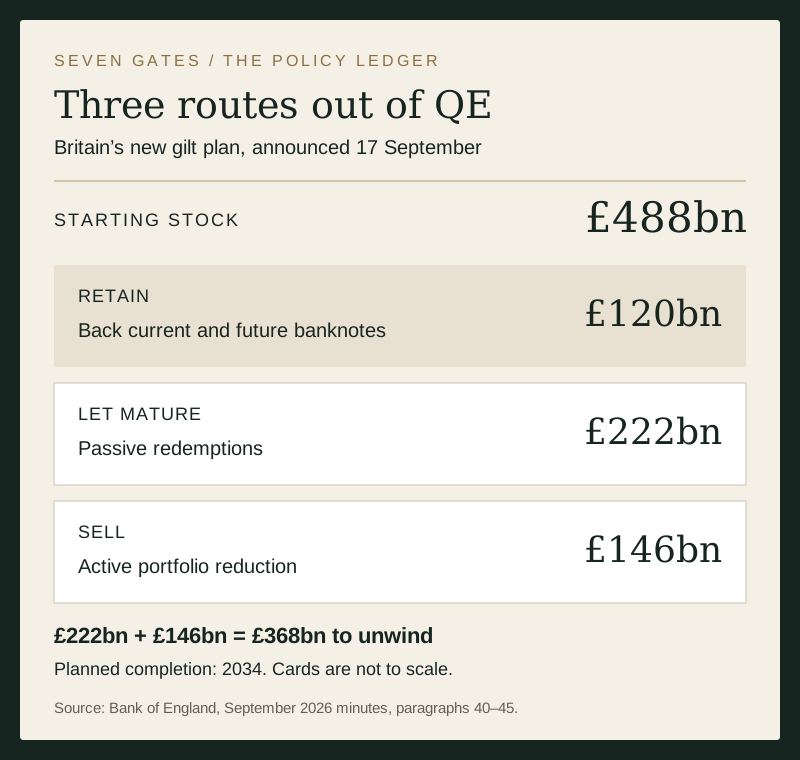
Britain held Bank Rate at 3.75%, with three of nine policymakers favouring an increase. The less obvious decision was to retain £120 billion of long-dated gilts for banknote backing, let £222 billion mature and sell £146 billion. The £368 billion monetary-policy portfolio is intended to disappear by 2034.
These are different tools answering different pressures. Japan is making money dearer; Britain is changing how much duration investors must absorb. For Nigeria, the connection is the global price of risk. Better oil receipts do not automatically deliver cheaper eurobond refinancing or patient foreign capital. Borrowers must still compete with returns available elsewhere.
Nor does a British pause imply that the inflation fight is finished. Separating the policy rate from bond sales lets a central bank restrain demand while managing the market's capacity to absorb its old portfolio.
Sources: Bank of Japan, 18 September decision · Bank of England, 17 September minutes
2. Oil is trading a repair forecast, not a repaired pipeline
Brent was $103.77 at 00:20 UTC, down 1%, as traders priced alternative export routes and hopes of a partial Saudi pipeline restart. Those are expectations, not restored capacity.
Reuters separately verified damage at three East-West pipeline pumping stations, one more than previously assessed. Sources disagreed on repairs: some estimated five to six weeks; another expected earlier partial operation. Saudi Aramco had not publicly clarified the timetable.
The Nigerian trade-off remains uncomfortable. Less scarcity can reduce crude receipts while easing fuel and freight costs. The useful signal is actual loading and delivery, not an official's confidence about repairs. A lower futures quote does not guarantee that a refiner can obtain the right cargo on time.
Sources: Reuters, oil prices, 18 September · Reuters, pipeline damage, 17 September
3. The war's civilian toll enters an accountability record
A UN fact-finding mission found reasonable grounds to believe U.S. strikes on a school and sports facility in Iran constituted war crimes. The school attack killed more than 150 people, including 120 children. It also found that Iran's suppression of protests involved crimes against humanity. These are investigative findings, not court judgments; Washington rejected the report.
The distinction is essential, but so is the consequence. Evidence preserved now can support later proceedings. Diplomacy cannot responsibly treat civilian protection as an optional appendix to reopening an oil route.
Sources: Reuters, mission findings, 17 September · AP, findings and U.S. response
4. Nigeria's retail-investor door needs stronger hinges
Dangote's $1.6 billion refinery IPO overwhelmed several investment platforms. Bamboo reported ten times normal traffic within 30 minutes; Bamboo and InvestNaija said service was normal by Wednesday. Neither the issuer nor underwriters disclosed subscription totals.
App traffic is not allotted capital. The durable opportunity is wider ownership; the immediate test is reliable payments, reconciliation and customer support. A failed screen must not become a duplicate debit. Nigeria needs successful settlement, not merely a crowded digital queue, before declaring a capital-market breakthrough.
Source: Reuters, platform outages and recovery, 17 September
5. AI's expansion still needs someone else's balance sheet
CoreWeave announced a proposed $3 billion convertible-note offering due in 2033, with a further $500 million purchaser option. Its SEC filing says proceeds would fund capped-call transactions and general corporate purposes. This is an announced financing, not evidence that the money has already arrived.
Convertible debt exchanges part of the cash-interest burden for potential equity upside. Capped calls can limit dilution over a specified range, but they cost money and do not eliminate repayment risk. The investment question is whether contracted computing revenue arrives fast enough to finance equipment, electricity and debt service. Strong demand and a strong balance sheet are different statements.
Source: CoreWeave, SEC filing, 17 September
Three numbers worth remembering
- 1.25%: Japan's newly announced overnight-rate target.
- £368 billion: Britain's remaining monetary-policy gilt unwind.
- $3 billion: CoreWeave's proposed convertible financing.
Sources are linked above. Market prices are timestamped observations.
What could change everything?
Verified Saudi pumping and export volumes would turn repair hopes into supply. Persistent inflation would make today's rate decisions a beginning, not an endpoint. For Nigeria, published IPO subscription and settlement figures would show whether digital enthusiasm has become investable capital. Watch completed transactions before celebrating announcements.
Prepared for 18 September 2026 from sources checked at publication. Repair estimates and financing plans remain provisional; transmission mechanisms are Seven Gates analysis.