SEVEN GATES DAILY BRIEF
Saudi Arabia's oil buffer is measured in days
Yanbu stocks may cover only five to seven days while the bypass pipeline is offline; oil reaches central-bank meetings, Trump raises the prospect of keeping Iranian oil, Anthropic chooses an exchange, and 129 people remain missing in Indonesia.
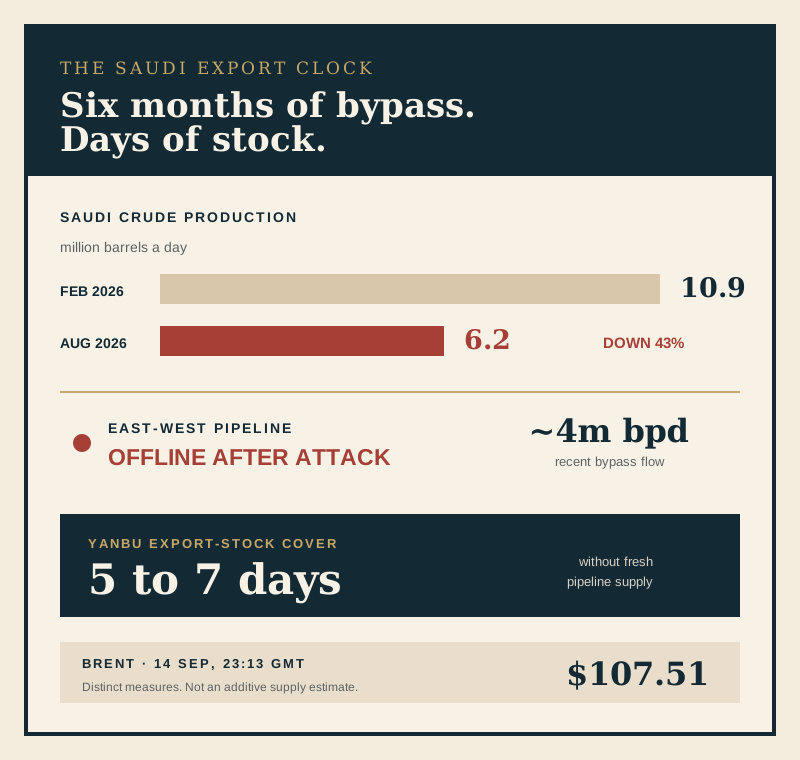
Saudi Arabia spent six months routing oil around Hormuz. Its principal bypass is now offline, and the buffer at the Red Sea end may be counted in days. The energy shock has acquired a clock.
1. Saudi Arabia has five to seven days to restore the bypass
Industry sources estimate that Yanbu holds enough oil to maintain exports for five to seven days without fresh pipeline supply. Saudi Arabia's East-West route, shut after Friday's drone attack, had carried about 4 million barrels a day to the Red Sea. Repair estimates range from a partial restart sooner to five or six weeks for full work; Riyadh has not disclosed the damage or timetable.
The underlying loss is already large. Saudi output fell from 10.9 million barrels a day in February to 6.2 million in August, a decline of about 43%. Brent reached $107.51 early Monday after the Oman meeting on Hormuz was postponed and new attacks hit Saudi Arabia and Gulf shipping.
Nigeria's arithmetic has two columns. A deliverable Bonny Light cargo earns the scarcity premium, but diesel, shipping, fertiliser and imported machinery absorb it. Higher global yields then raise the discount rate on naira assets and sovereign funding. The fiscal upside requires production and liftings; the inflation invoice merely requires a port.
Sources: Reuters, Saudi stocks, pipeline flows and production, 13 September · Reuters, Brent and postponed Oman meeting, 14 September
2. The oil shock has arrived at the central banks
Markets now assign an 86% probability to a quarter-point Federal Reserve increase on Wednesday after a hot U.S. inflation reading. Goldman Sachs reversed its hold forecast, while investors price a 76% chance that the Bank of Japan raises its policy rate to 1.25% on Friday. The U.S. 10-year yield was 4.974%.
This is the second-round damage. Expensive energy becomes transport and goods inflation, then a policy-rate response, then a lower valuation for long-duration assets. Asian AI shares and Nasdaq futures fell together because the market is repricing both safety risk and the price of waiting for future profits.
Sources: Reuters, global markets and policy probabilities, 14 September · Federal Reserve, official FOMC calendar
3. Trump has introduced ownership into the Iran war aim
President Donald Trump said the United States could remain in Iran and “keep the oil”, comparing the possibility with Washington's arrangement to control a fifth of Venezuela's reserves. He also repeated that he expects the war to end this year and said petrol prices would fall sharply afterward.
The remark is not a published policy. It still matters because it changes the bargaining signal from security and navigation to possession. Resource control would require a longer military presence, intensify Iranian resistance and complicate relations with Gulf states already seeking de-escalation. That is an occupation plan wearing a petrol-price promise.
Source: Reuters, Trump's remarks in Ireland, 13 September
4. Anthropic is approaching the market with one foot on the brake
Business Insider reported that Anthropic has selected Nasdaq for a potential initial public offering. The company has not publicly confirmed the choice. The report came one day after chief executive Dario Amodei urged frontier laboratories to slow model development, coordinate and admit independent evaluators.
There is no contradiction in raising permanent capital for safer development. There is a tension if listing incentives reward release speed while the safety case requires restraint. Investors should demand evaluator access, incident disclosure and a binding development protocol before arguing over the ticker. Nasdaq is an exchange, not a safety framework.
Sources: Reuters, reported Nasdaq selection, 13 September · Reuters, Amodei's safety proposal, 12 September
5. Indonesia's rescue operation is racing weather and distance
More than 600 rescuers and about 12 vessels are searching the Java Sea for 129 people missing from the Virgo Transport 8. The passenger ship carried 243 people when it capsized in bad weather on Sunday. Authorities had rescued 108 and confirmed six deaths by Monday morning.
The numbers remain provisional. The priority is locating survivors, reconciling the passenger manifest and establishing why a vessel carrying hundreds disappeared before rescue agencies could intervene. Maritime safety begins long before the searchlights arrive.
Sources: Indonesia's national search-and-rescue service, active operation record · Reuters, rescue deployment and confirmed toll, 14 September
Three numbers worth remembering
- 5 to 7 days: estimated Yanbu export-stock cover without the East-West pipeline.
- 86%: market-implied probability of a U.S. rate increase on Wednesday.
- 129: people still missing from the Virgo Transport 8 by Monday morning.
Sources are linked in items 1, 2 and 5. Market prices and probabilities are dated observations, not forecasts.
What could change everything?
A verified Saudi repair timetable or partial restart would reset the oil countdown. The Federal Reserve could reject market pricing and separate temporary energy inflation from persistent demand. In Indonesia, every manifest correction and rescue changes the human accounting; early totals must not harden into conclusions.
Prepared for 14 September 2026 from sources published through 03:45 UTC. Incident and rescue details remain provisional; calculations and transmission mechanisms are Seven Gates analysis.