SEVEN GATES DAILY BRIEF
Hormuz, not central banks, is setting the price of money
Renewed US-Iran attacks on shipping pushed oil towards $100 just as strong American hiring revived rate-rise expectations, tightening financial conditions while Nigeria prepares a landmark refinery share offer.
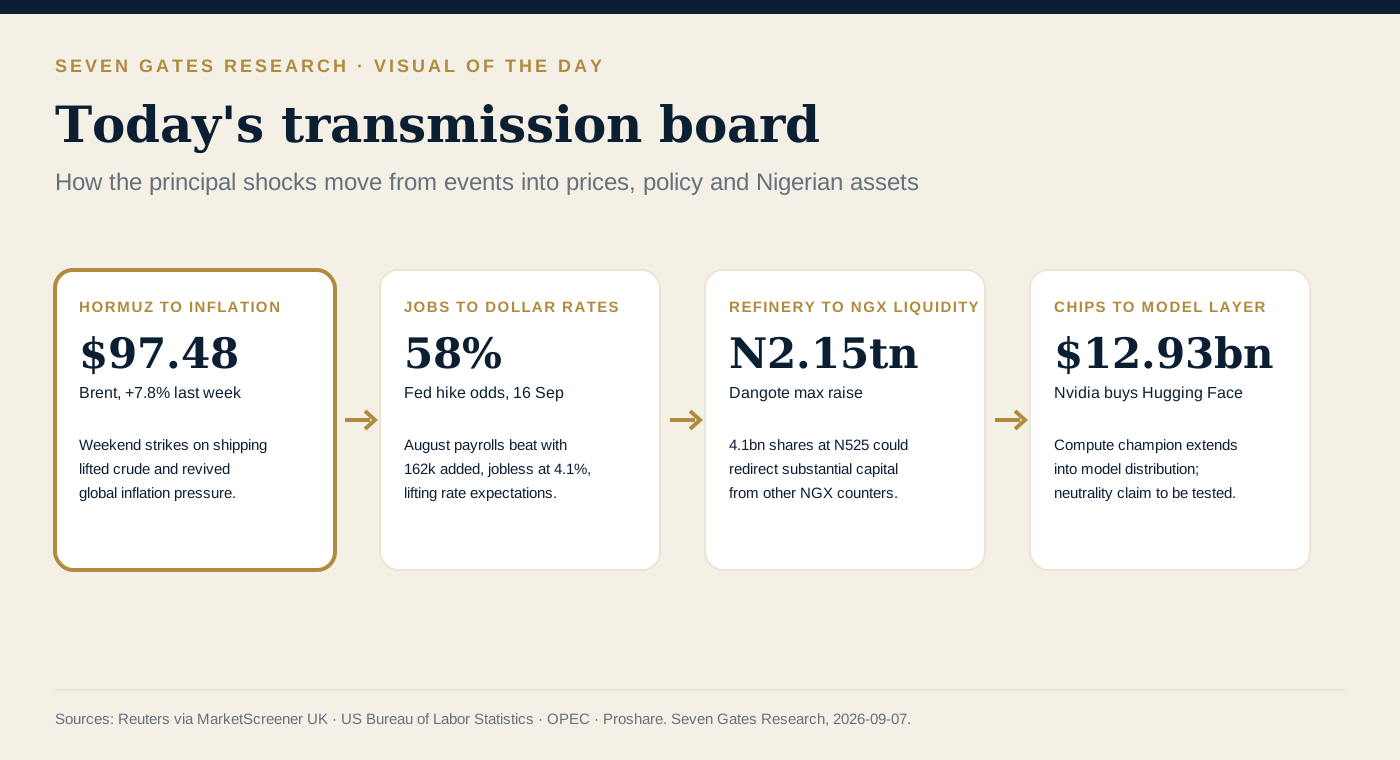
Markets begin the week caught between two inflationary signals: constrained energy supply and an American labour market that refuses to cool on schedule. The combination is lifting oil, the dollar and rate expectations together. Nigeria receives some protection through higher petroleum receipts and domestic refining, but freight, insurance and frontier-market funding costs travel in the opposite direction. Meanwhile, Dangote is asking the local capital market to absorb an offer of unusual scale.
1. The Hormuz shock has reached monetary policy
Weekend attacks on shipping have made the Strait of Hormuz the immediate price-setter for global risk. US forces struck three Iranian oil tankers after reported attacks on American warships, while Tehran said it would announce a restricted Gulf zone and a new shipping corridor. Brent reached $97.48 a barrel after gaining 7.8% last week. OPEC+ kept October production requirements unchanged, offering no cavalry. Separately, the US added 162,000 jobs in August and unemployment held at 4.1%, lifting the market-implied probability of a Federal Reserve increase on 16 September to 58%. For Nigeria, dearer oil can strengthen export receipts, but higher shipping costs, dollar yields and inflation complicate that benefit.
Sources: Reuters via MarketScreener UK · US Bureau of Labor Statistics · OPEC
2. Dangote’s offer will test the depth of Nigeria’s bull market
Nigeria’s capital market has moved quickly from prohibition to prospectus. In June, the Securities and Exchange Commission warned that no Dangote Petroleum Refinery offer had been filed or approved. Proshare now reports an SEC-approved offer of as many as 4.1 billion shares at ₦525 each, implying a maximum raise of roughly ₦2.15 trillion, with transaction documents due to be signed today. The timing is favourable: the NGX All-Share Index has returned 58.72% this year and market capitalisation stands at ₦159.56 trillion. Yet the offer will also drain liquidity from other counters and test local institutions’ capacity. The decisive details are the refinery’s valuation, free float, governance rights and intended use of proceeds, not merely the size of the queue.
Sources: Proshare · Securities and Exchange Commission Nigeria
3. AI is accelerating as its infrastructure becomes more concentrated
OpenAI says it has reached its internally defined “automated research intern” milestone: agents can complete well-specified tasks that would occupy skilled researchers for days. Its research organisation now consumes 3.1 agent-workdays for every human workday, although OpenAI cautions that compute, judgement and less-automatable tasks remain bottlenecks. At the distribution layer, Nvidia has agreed to acquire Hugging Face for $12.93 billion. The platform hosts more than three million models for 18 million developers and researchers. Nvidia promises it will remain open and will not require Nvidia hardware. The strategic tension is obvious: the dominant supplier of AI compute would also own one of the principal marketplaces through which open models are discovered and deployed. Promises of neutrality will eventually meet product incentives.
Sources: OpenAI · Nvidia · Associated Press
4. America’s midterms are becoming a constraint on presidential power
A fresh Axios analysis puts Democrats about six points ahead on the national House ballot, enough in its model for a narrow 221-seat majority. Republican redistricting provides substantial protection, however, and could withstand a Democratic margin of roughly five points. Alongside the electoral arithmetic, the Trump administration has again asked the Supreme Court to permit restrictions on mail ballots after a federal judge blocked them. Ballots have already begun moving in North Carolina, leaving courts, states and the Postal Service little time for another rules change. A Democratic House would bring investigations and harder bargaining over tax, trade and war policy. A close election conducted under shifting procedures would create a different risk: prolonged conflict over legitimacy. Polls remain snapshots, not property deeds.
Sources: Axios · Associated Press
Three numbers worth remembering
| Number | Why it matters | Source |
|---|---|---|
| $97.48 | Brent crude per barrel at 07:27 GMT, reflecting renewed attacks on shipping and constrained Hormuz flows. | Reuters via MarketScreener UK |
| ₦2.15tn | Maximum proceeds implied by Dangote Petroleum Refinery’s reported offer of 4.1 billion shares at ₦525. | Proshare |
| 3.1 | Agent-workdays used across OpenAI research for every human workday, according to the company’s internal measurement. | OpenAI |
What could change everything?
- Whether Iran’s proposed restricted Gulf zone changes actual vessel movements and insurance terms, rather than merely the language of the conflict.
- US producer-price data on 10 September and consumer-price data on 11 September, the final major inflation signals before the Federal Reserve decision on 16 September.
- Publication of Dangote Petroleum Refinery’s final prospectus, particularly the implied valuation, allocation structure, free float and use of proceeds.
- Whether the Democratic House polling advantage survives Republican redistricting and the legal dispute over mail voting as ballots are distributed.