SEVEN GATES RESEARCH · REPORT
PZ Nigeria: The Soap Has Stopped Slipping
PZ Cussons Nigeria has repaired its balance sheet, restored dividends and returned to growth. Yet most of FY2026's spectacular profit came from asset disposals and currency gains. We separate the operating recovery from the accounting fireworks, explain the two listings, test the alleged arbitrage and value both shares.

PZ Nigeria has staged a proper recovery. The headline profit has also brought several well-dressed one-offs. And the London share is not the same security.
Seven Gates Research | 1 September 2026
The verdict first
| Security | Price used | Seven Gates view | Base value | Valuation range | What would change the view? |
|---|---|---|---|---|---|
| PZ Cussons Nigeria (NGX: PZ) | ₦81.00 | WATCH | ₦71 | ₦50 to ₦102 | Consider buying around ₦55 to ₦57, or upgrade if clean operating profit begins to grow faster than inflation without help from FX |
| PZ Cussons plc (LSE: PZC) | 103.6p | CAUTIOUS BUY | 123p | 90p to 162p | Evidence that FY26 cost savings, volume growth and cash conversion survive a less friendly currency year |
Price snapshot: latest available closes at preparation on 1 September 2026, ₦81 on 31 August for Nigeria and 103.6p on 28 August for London. Valuation uses a rounded ₦1,810/£ cross-rate derived from the 31 August USD/NGN and GBP/USD observations.
The short version: the Nigerian rebound is real at the level of sales, distribution, balance-sheet repair and reduced foreign-currency exposure. The reported ₦45.2 billion profit after tax is not a sensible annual earnings base. Once asset-sale gains and FX gains are removed, underlying operating profit was roughly flat year on year. At ₦81, the local share has already received a congratulatory telegram from the market.
The London parent is a different proposition. It owns 73.27% of PZ Cussons Nigeria, plus the UK, Australia and New Zealand, Indonesia, other African operations and a collection of central costs that could feed a small ministry. At about 104p, that broader portfolio offers the better risk-reward, although “46% undervalued” is too confident for a business whose recent results have moved with the naira, asset sales and tax adjustments.
There is no clean arbitrage between the two listings. They are relatives, not twins.
I. A recovery with three different kinds of profit
PZ Cussons Nigeria reported revenue of ₦260.46 billion for the year to 31 May 2026, up 22.5%. Gross profit rose 27.0% to ₦73.27 billion. Profit after tax increased from ₦10.07 billion to ₦45.17 billion, and earnings per share rose from ₦2.32 to ₦10.87. The board proposed a ₦2.50 dividend, the first payout after a four-year pause.
Those are not invented numbers. PwC signed an unqualified audit opinion. Cash exists. Assets were sold. Debt was repaid. The business is plainly in better condition than it was when the naira devaluation turned its dollar obligations into a wrecking ball.
The difficulty is classification. There are operating profits, currency profits and profits that arrive with a surveyor, a deed of assignment and somebody asking where to stamp the document.
The FY2026 profit bridge
| Item | FY2026 | FY2025 | What it tells us |
|---|---|---|---|
| Revenue | ₦260.46bn | ₦212.63bn | Genuine growth of 22.5% |
| Gross profit | ₦73.27bn | ₦57.71bn | Gross margin improved by about 100 basis points |
| Reported operating profit | ₦77.06bn | ₦18.92bn | Impressive, but contains large non-recurring gains |
| Less: other income | (₦39.92bn) | (₦1.80bn) | FY2026 included a ₦38.67bn asset-disposal gain |
| Recurring operating profit, company presentation | ₦37.14bn | ₦17.12bn | Up 117%, but still includes FX movements |
| Less: FX gain / add back FX loss | (₦11.84bn) | +₦7.78bn | Removes currency revaluation from both years |
| Operating profit before other income and FX | about ₦25.30bn | about ₦24.91bn | The sober number: essentially flat |
This is the centre of the case. Revenue grew by more than a fifth. The cleanest operating-profit measure grew by roughly 1.6%. PZ sold more, served many more outlets and improved gross margin, but distribution, administration and marketing absorbed most of the advance.
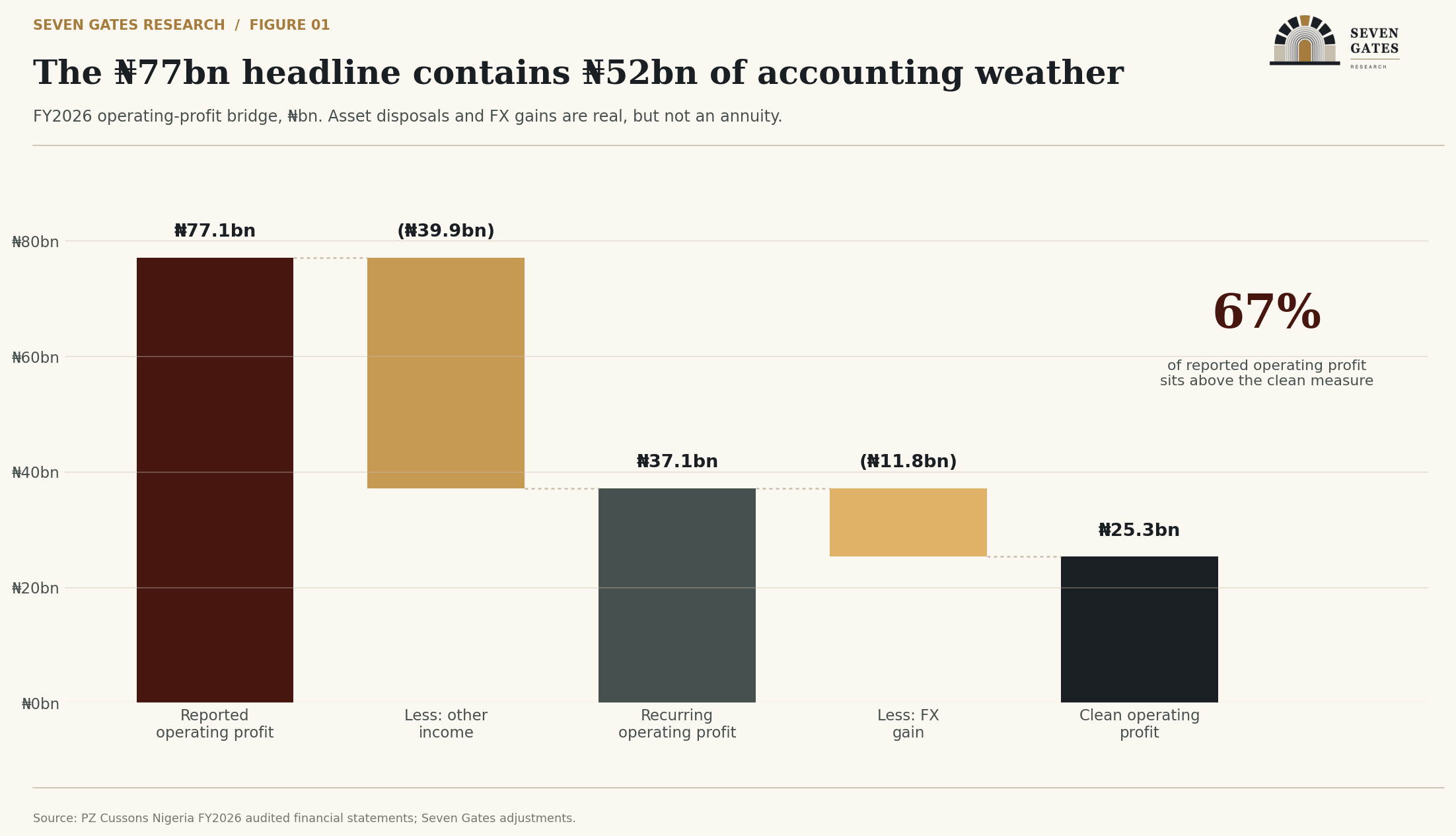
Figure 1. The asset sale produced cash, but 67% of reported operating profit sits above the clean measure.
The audited statements deserve credit for saying the quiet part clearly: management considers the disposal gains non-recurring and asks users to assess them separately. One seldom receives such direct assistance from a set of accounts. We should accept it.
CAPE’s yellow light. Lower Nigerian CAPEs historically preceded stronger long-run real price returns in naira and dollars, across robustness checks; a small forward test is encouraging. At the paper’s 20.95x reading, the market looks expensive, not doomed. Earnings, disinflation, currency stability and better institutions must deliver, or optimism becomes advance payment.
The number that forgot the dividends
The chart below is a price return, not a total return. Comparable dividend-adjusted history across the NGX share and its London parent is not robust enough for a clean ten-year bridge, so both securities travel without their cash coupons. That understates the shareholder experience, especially in London. It does not understate the naira problem.
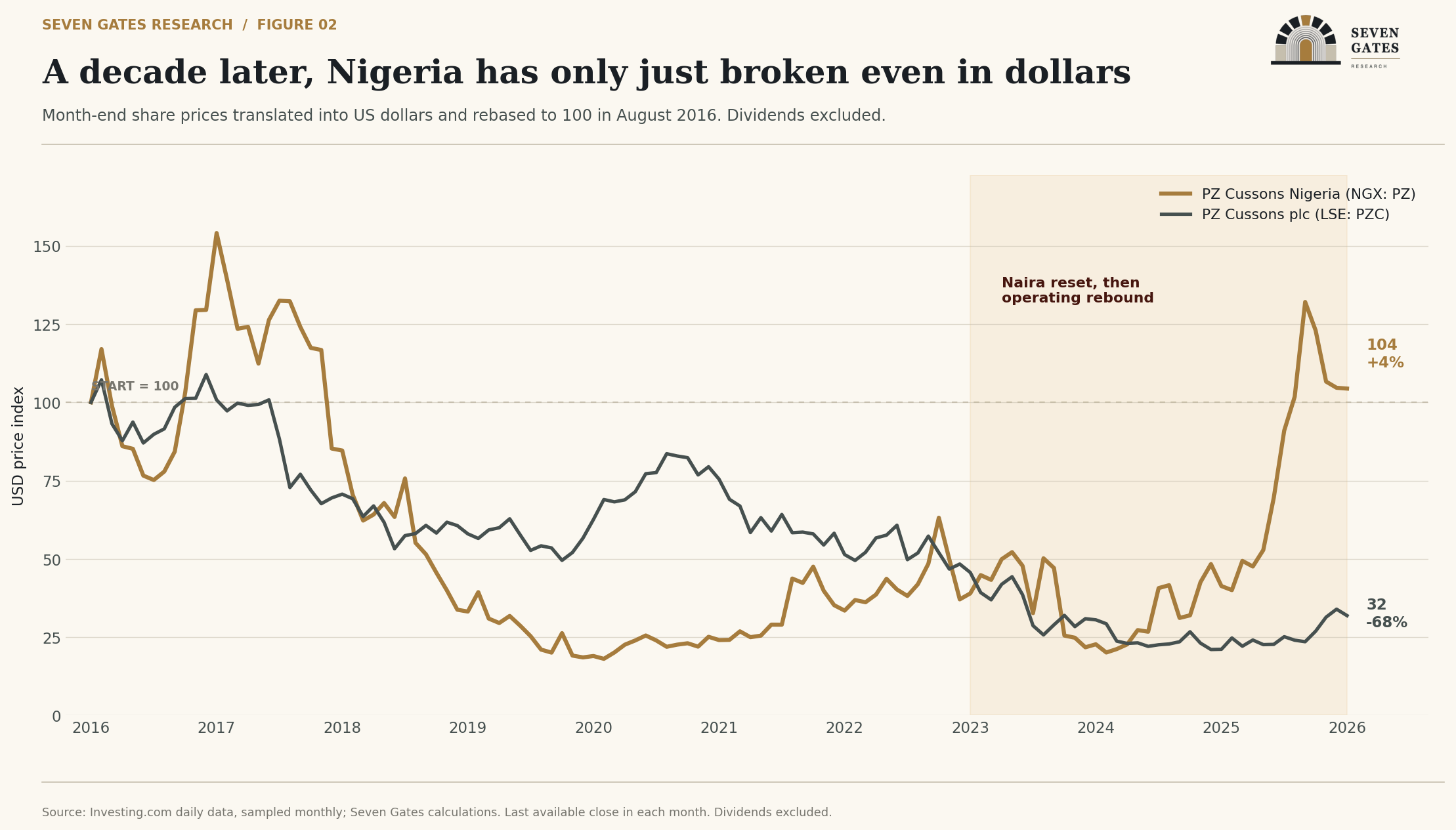
Figure 2. 121 monthly observations, August 2016 to August 2026, rebuilt from daily records. Each series uses its last available quote in the calendar month. Underlying data, including quote dates.
The local share rose from ₦18.01 to ₦81.00, a handsome 350% in naira. Translated into dollars, it finished the decade at an index level of 104, only 4% above where it began. The London parent fell from 335p to 103.6p and ended at 32 in dollar terms, a 68% decline before dividends. Nigeria has been the better listed claim over this window, but “better” has mostly meant surviving the currency translation. The last twelve months did nearly all the rescuing.
These are nominal dollar returns, not inflation-adjusted returns. Historical FX quotes are indicative and do not prove that an investor could convert or repatriate money at those rates, particularly during Nigeria’s periods of multiple exchange rates and capital constraints.
II. What is genuinely going right
1. Volume has joined price
The rebound is not only inflation wearing a new tie. The London parent reported that Nigerian revenue grew with both price/mix and volume. Across Africa, like-for-like revenue increased 14.7%, comprising 9.5% price/mix and 5.2% volume.
This matters. Nigerian consumer companies can report heroic nominal growth while selling fewer packets to fewer households. PZ avoided that particular magic trick in FY2026.
2. Distribution has become much wider
The number of stores served rose by more than 40% to 250,000. “Golden Outlets”, shops receiving greater merchandising and execution support, also increased more than 40% to roughly 14,000. Exports to West and Central Africa grew.
Distribution is a real competitive asset in Nigeria. A brand that exists on a strategy slide but not on the shelf is a PowerPoint company. PZ has put more products on more shelves.
3. The brands are doing useful work
Stella, now the largest Nigerian brand in the group’s account, performed particularly well. Management is trying to “de-seasonalise” the petroleum jelly beyond harmattan. There is sound logic here. Dry skin does not sign an exclusive supply agreement with December.
Electricals revenue rose more than 20%, led by refrigeration and the Haier Thermocool showroom network. Energy-saving products also fit the Nigerian household’s present concern rather neatly: the appliance must perform its domestic duty without entering a joint venture with the electricity bill.
4. Marketing has returned
Advertising and market-promotion expense more than doubled to ₦7.75 billion. That depresses current profit, but the direction is strategically sensible if returns are measured. Carex was relaunched, Stella received support and route-to-market investment increased.
The next job is to prove that the spending creates repeat purchase and pricing power. Marketing is an investment only when customers eventually remember why the company paid for it.
5. The foreign-currency trap has been reduced
Borrowings fell from ₦71.27 billion to ₦5.90 billion. Amounts owed to related parties declined from ₦80.26 billion to ₦43.78 billion. The group’s net US-dollar liability fell from about $67.6 million to $13.8 million.
At year-end, a 10% dollar appreciation was estimated to reduce profit and equity by about ₦1.90 billion, compared with ₦10.73 billion a year earlier. That is still exposure, but it is no longer an open window in a rainstorm.
6. The balance sheet has come back from negative equity
Total equity improved from negative ₦17.34 billion to positive ₦66.64 billion. Cash and equivalents were ₦40.76 billion. Net cash after borrowings was about ₦34.86 billion.
Part of this repair came from earnings. Another ₦38.81 billion came from the parent waiving old obligations for global IT recharges and technical services relating to 2020 to 2022. The accounts call this a capital contribution. Economically, it was debt forgiveness, not a fresh cash cheque. The parent looked at several old invoices and decided that family peace was worth more.
The waiver is still valuable. A liability disappeared. It simply should not be confused with operating cash generation.
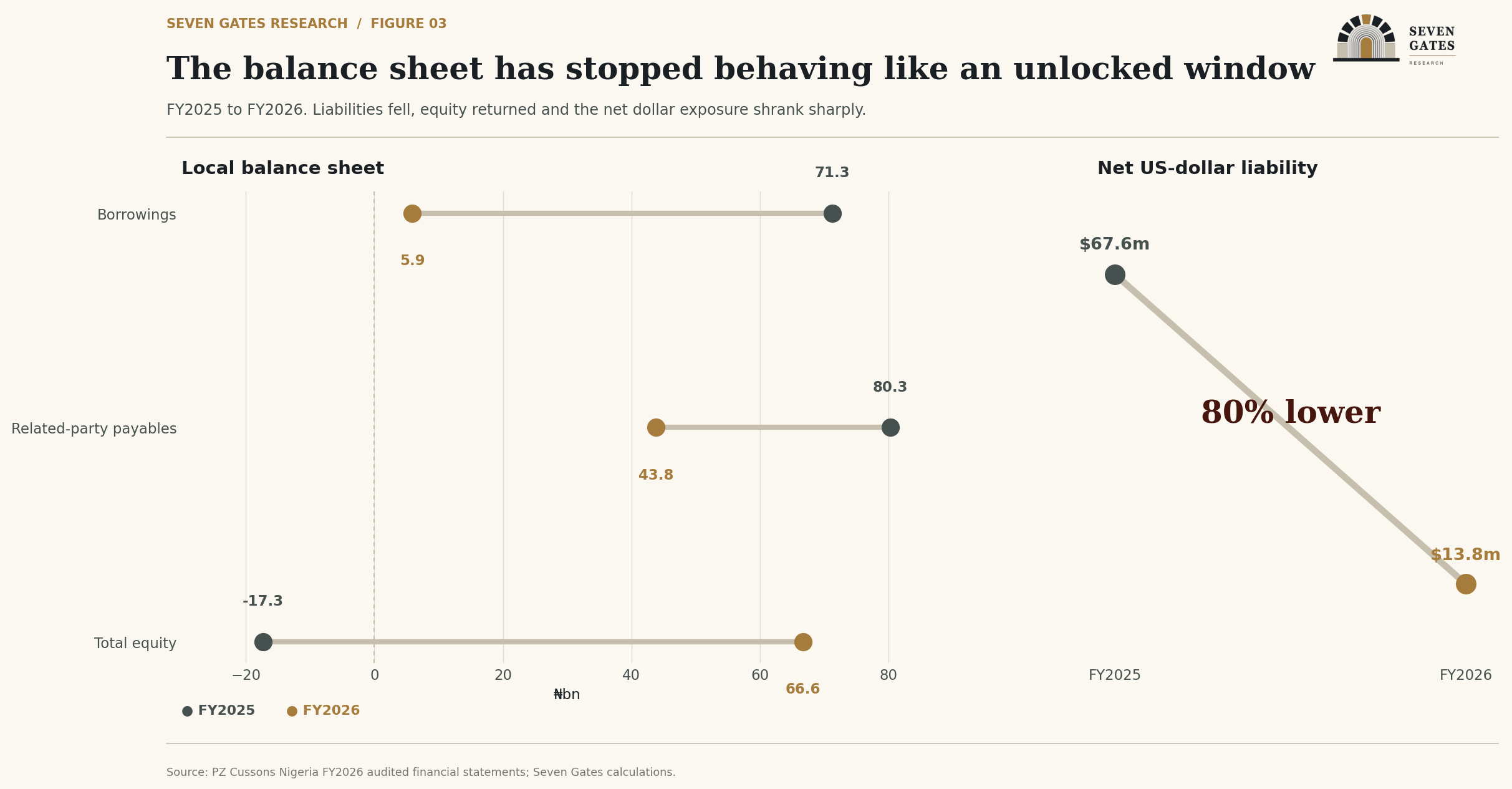
Figure 3. The sharpest improvement is not the profit line. It is the much smaller balance-sheet target offered to the dollar.
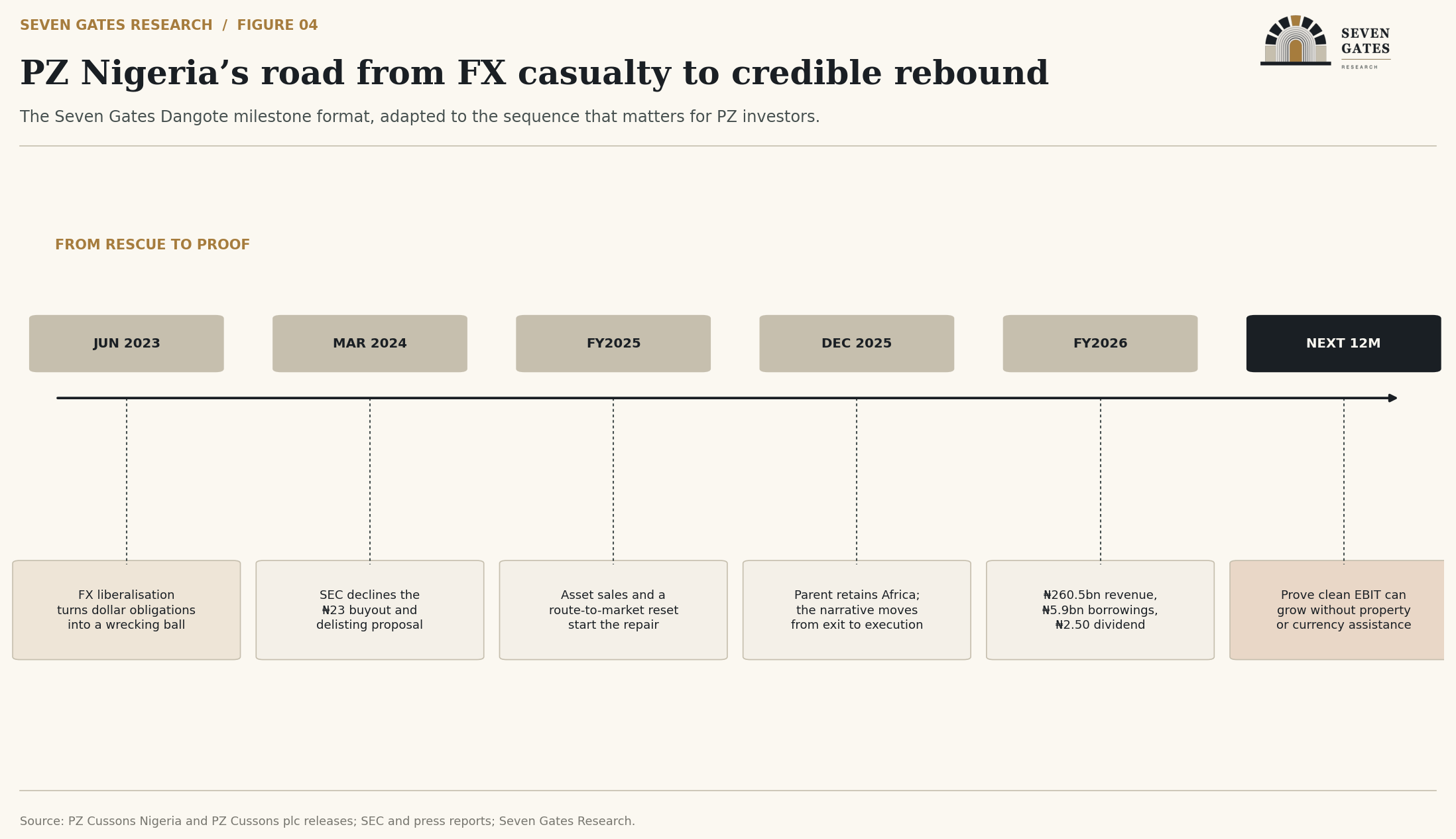
Figure 4. The milestone format follows the Seven Gates Dangote IPO chart. PZ has moved from rescue to proof.
III. How much of the profit can come back next year?
The disposal gain was real, cash-generative and non-repeatable
PZ recorded a ₦38.67 billion gain from selling property, plant, equipment and assets held for sale. Cash proceeds received during the year were about ₦32.49 billion, with a further ₦6.50 billion outstanding at year-end. The disposed assets carried only about ₦322 million of book value.
This is not fake profit. The assets were worth considerably more than their accounting values, and the sale produced cash. The error would be to take a one-time property gain and apply a consumer-goods price-to-earnings multiple to it. A building can be sold once. Even Lagos land, for all its talents, cannot be disposed of every Tuesday.
The FX gain is less repeatable than the products
FY2026 included an ₦11.84 billion foreign-exchange gain, compared with a ₦7.78 billion loss in FY2025. The closing naira rate used by the group strengthened from ₦1,586/$ to ₦1,373/$.
The reduced dollar liability makes future FX disasters less likely, which is excellent. It also means the FY2026 revaluation benefit should not be projected as a recurring source of growth. The hedge has improved because the exposure is smaller. A smaller exposure will also produce smaller windfalls.
The tax charge needs disassembly too
The ₦32.15 billion income-tax expense looked alarming beside the prior year’s ₦6.59 billion. Yet only ₦11.26 billion was current tax, and cash tax paid was ₦8.24 billion. The total charge included:
| Tax component | FY2026 |
|---|---|
| Company income tax | ₦3.10bn |
| Minimum tax | ₦4.16bn |
| Development levy | ₦0.66bn |
| Capital gains tax | ₦3.18bn |
| Prior-year and uncertain-tax items | about ₦1.46bn |
| Deferred-tax charge | ₦20.88bn |
| Total income-tax expense | ₦32.15bn |
The effective accounting tax rate was 41.6%. A large part of the increase came from releasing deferred-tax assets and from taxes associated with the asset sales. The tax note is less a footnote than a small annex, but the conclusion is simple: neither the ₦32.15 billion tax charge nor the ₦45.17 billion net profit is a clean guide to the next ordinary year.
Cash flow confirms a healthy business, not a ₦45 billion annuity
Cash generated from operations was ₦38.28 billion, slightly below ₦41.03 billion in FY2025. After tax, operating cash flow was ₦30.04 billion. Capital expenditure was ₦5.07 billion, leaving roughly ₦25 billion of operating free cash flow before financing and asset-disposal proceeds.
That is respectable. It is also materially below reported profit after tax. Inventories and receivables absorbed cash as the business expanded. The cash flow statement is not waving a red flag. It is asking the headline to lower its voice.
IV. What is the sustainable earnings number?
There is no single immaculate adjustment, so we use a range.
- Reported EPS: ₦10.87. This includes disposal gains and FX gains. It should not anchor valuation.
- Recurring EPS including FY2026 FX benefit: roughly ₦5.0 to ₦5.5. This treats asset gains as one-off but gives some credit to the year’s currency outcome.
- Clean through-cycle EPS: roughly ₦3.8 to ₦4.5. This removes asset gains and most FX revaluation, then applies a normalised tax rate and minority-interest charge.
At ₦81, the stock trades on only 7.5 times reported EPS, which looks cheap. On a more defensible earnings base, it trades at roughly 15 to 21 times earnings. The soap has stopped slipping. The valuation has put on sensible shoes.
The proposed ₦2.50 dividend yields about 3.1% at ₦81. It represents only 23% of reported EPS, but roughly 45% to 65% of our normalised EPS range. The dividend is affordable. It does not make the share an income bargain.
V. Nigeria and London: are these even the same company?
No. They sit in the same corporate family and share history, brands and management relationships, but an investor buys different legal and economic claims. One correction to the casual shorthand: PZ Cussons plc is not the Nigerian company’s former parent. It remains the controlling parent through PZ Cussons Holdings, with 73.27% of the local shares.
| Question | PZ Cussons Nigeria, NGX: PZ | PZ Cussons plc, LSE: PZC |
|---|---|---|
| What do you own? | A minority share in the Nigerian listed operating group | A share in the global ultimate parent |
| Main operations | Home and personal care in Nigeria, plus electrical appliances | UK and Americas, Australia and New Zealand, Indonesia, Nigeria and other Africa |
| Ownership link | PZ Cussons Holdings owns 73.27% | Owns the 73.27% Nigerian stake through its holding structure |
| Important subsidiary | PZ Nigeria owns 74.99% of HPZ, the electricals business | Effective economic interest in HPZ is about 54.95% before other structural considerations |
| Currency | Naira | Sterling, with multinational earnings exposure |
| Minority leakage | Local shareholders share HPZ profit with HPZ’s 25.01% minority | London shareholders lose 26.73% of PZ Nigeria profit, then also bear the HPZ minority |
| Balance sheet | Nigerian cash, local borrowings and related-party balances | Global debt, central costs, pensions and cash across markets |
| Dividend | Set by the Nigerian board and paid in naira | Set by the UK board and paid in sterling |
| Share conversion | None | None |
This last line matters. An NGX PZ share cannot be exchanged for a fixed number of LSE PZC shares. There is no depositary receipt tying them together. No market maker is obliged to close the gap.
The PZ Wilmar sale is another source of confusion. The London group agreed to sell its separate 50% edible-oils joint-venture stake for $70 million, with expected net proceeds of about $64 million to reduce debt. That was not a sale of the NGX-listed company, nor $70 million payable to its minority shareholders. It is also distinct from PZ Nigeria’s own property-disposal gains. The parent’s transaction announcement makes the perimeter clear.
A traveller at the Lokoja junction understands this instinctively. Two buses may carry the same family name on the windscreen. One terminates in Lagos. The other continues through Manchester, Sydney and Jakarta, with head-office luggage tied to the roof. The fares need not match.
VI. The apparent price gap
Using the price snapshot above and a rounded exchange rate of ₦1,810/£:
- PZ Cussons Nigeria’s ₦321.6 billion market value equals roughly £178 million.
- The London parent’s 73.27% stake is therefore worth about £130 million at the Nigerian market price.
- PZ Cussons plc’s total London market value is about £444 million.
- The quoted Nigerian stake equals roughly 29% of the London parent’s market capitalisation.
The remainder of the London value must cover the UK and Americas, Asia Pacific, other African assets, head-office costs, pensions and net debt.
This does create a useful look-through valuation check. It does not create a riskless arbitrage.
Why the gap cannot be mechanically harvested
- The securities cover different assets. Shorting London while buying Lagos leaves exposure to the UK, Australia, Indonesia, central costs and global capital allocation.
- There is no conversion mechanism. Relative mispricing can persist indefinitely.
- Cash is not perfectly fungible. The parent excludes Nigerian cash when measuring adjusted leverage because repatriation, tax and currency conditions matter.
- The currencies differ. A naira return and a sterling return can tell very different stories to the same investor.
- Liquidity and governance differ. The local float is smaller, while the parent controls strategy and related-party arrangements.
- Minority interests complicate the bridge. The parent does not retain every naira reported by the Nigerian group.
There is also history. In 2023, the parent proposed buying out Nigerian minorities and delisting the local company, eventually offering ₦23 per share. The SEC declined to give its no-objection in March 2024. At today’s ₦81 price, a renewed offer would be a much more expensive conversation. It should be treated as optionality, not a valuation pillar.
VII. Seven Gates SOTP: PZ Cussons Nigeria
We value the two operating segments on clean, through-cycle EBIT, then add consolidated net cash and deduct the value belonging to HPZ’s outside shareholders. Asset-disposal profits receive their value through the balance sheet, not through a recurring earnings multiple.
Base-case bridge
| Nigerian component | Normalised EBIT | Multiple / adjustment | Value |
|---|---|---|---|
| Home and personal care | ₦13.5bn | 11.0x | ₦148.5bn |
| Durable electrical appliances, 100% enterprise value | ₦15.5bn | 8.5x | ₦131.8bn |
| Consolidated net cash | Cash less borrowings | ₦34.9bn | |
| Less: HPZ outside shareholders | 25.01% of HPZ equity value | (₦31.4bn) | |
| Less: restricted cash | Unclaimed-dividend funds | (₦0.4bn) | |
| Estimated equity value attributable to NGX shareholders | ₦283.3bn | ||
| Shares outstanding | 3.970bn | ||
| Value per share | ₦71.4 |
The home and personal-care EBIT assumption sits above the FY2026 ex-disposal, ex-FX result because some marketing and distribution investment should mature into revenue. It remains well below the reported segment profit. Electricals receives a lower multiple because appliances are more cyclical, working-capital intensive and exposed to imported components.
The minority deduction matters. HPZ equity value is its ₦131.75 billion enterprise value plus ₦2.60 billion cash, less ₦5.90 billion external related-party borrowing and ₦3.00 billion owed to PZ Nigeria. Its 25.01% outside interest is therefore worth about ₦31.4 billion in this case. The internal loan cancels in consolidated net cash but still reduces the subsidiary equity shared with outsiders. Source: audited accounts, notes 10, 13, 16, 25 and 34.
We make no separate addition for the ₦6.5 billion disposal receivable, retaining a conservative buffer for settlement obligations and working capital. The model also assumes reported trade and service payables are operating liabilities, not additional financing; overdue or debt-like balances would lower value.
Scenario range
| Case | Key assumptions | Value per share | Upside / downside from ₦81 |
|---|---|---|---|
| Bear | Home care EBIT ₦10bn at 9x; electricals ₦14bn at 7x | ₦50 | (38%) |
| Base | Home care EBIT ₦13.5bn at 11x; electricals ₦15.5bn at 8.5x | ₦71 | (12%) |
| Bull | Home care EBIT ₦18bn at 13x; electricals ₦18bn at 10x | ₦102 | +26% |
Each scenario applies the same cash and borrowing snapshot and recalculates the HPZ minority deduction. Our practical buy zone is ₦55 to ₦57, roughly 20% below base value. Above ₦100, the market would be paying for much of the bull case before management has produced a clean year to support it.
Local verdict: WATCH. The company has improved faster than the share’s trailing P/E suggests, but the share price now discounts a respectable recovery. We will not pay a growth multiple for land-sale profit merely because the land left behind an attractive farewell note.
VIII. Seven Gates SOTP: PZ Cussons plc
For London, we capitalise regional adjusted operating profit, deduct the value of central costs, use adjusted net debt that excludes Nigerian cash already embedded in the local stake value, and add the after-tax value of the pension surplus.
Base-case bridge
| Parent component | Valuation method | Value |
|---|---|---|
| Europe and Americas | £36.6m adjusted EBIT at 10.5x | £384m |
| Asia Pacific | £23.9m adjusted EBIT at 10.5x | £251m |
| 73.27% stake in PZ Nigeria | Local base-case equity value at ₦1,810/£ | £115m |
| Other Africa | Conservative standalone estimate | £15m |
| Capitalised central costs | £22.9m at 9.0x | (£206m) |
| Adjusted net debt | Excludes Nigerian cash | (£49.5m) |
| Pension surplus and other | Rounded after-tax allowance | £20m |
| Estimated parent equity value | £529m | |
| Value per share | 428.7m shares | 123p |
Parent scenario range
| Case | Value per share | Interpretation |
|---|---|---|
| Bear | 90p | Savings fade, central costs remain heavy, Nigeria rerates down |
| Base | 123p | Mid-single-digit growth, stable margins, steady deleveraging and no heroic FX assumption |
| Bull | 162p | Cost savings compound, APAC growth improves and Nigeria converts distribution gains into clean profit |
At 103.6p, the parent trades at roughly 14.5 times FY2026 adjusted EPS of 7.14p and offers a dividend yield near 3.6%. That is not abandoned-building cheap. It is reasonable for a branded consumer group whose net debt has fallen from £112 million to £25 million and whose gross debt has declined by £174 million in three years.
The January article suggesting the London shares were 46% below a DCF value used an 8.8% cost of equity and pre-dated the final FY2026 result. DCFs can be useful, but a low discount rate applied to a long terminal period can make future cash look unusually punctual. Our SOTP gives a lower and more testable base value of 123p, about 19% above the current price, before dividends.
London verdict: CAUTIOUS BUY. The parent gives access to the Nigerian recovery without making it the entire thesis. The repaired balance sheet, structural savings and regional diversification create a better skew than the local share at ₦81. The central-cost burden and minority leakage keep this from becoming a table-thumping recommendation.
IX. What could make the recovery durable
The next set of accounts should answer five questions.
1. Can clean operating profit grow without FX help?
This is the decisive test. We want growth in operating profit before asset sales and currency revaluation. FY2026 delivered sales growth and brand investment, but little ex-FX operating leverage.
2. Does distribution productivity follow distribution expansion?
Serving 250,000 outlets is impressive. Revenue per outlet, repeat orders, receivable days and gross margin will tell us whether the network is productive or merely larger.
3. Can gross margin keep improving while consumers remain strained?
The gross margin increased from 27.1% to 28.1%. Another 100 to 200 basis points over two years would materially alter the valuation. A return of imported-input inflation or price resistance would do the opposite.
4. Are marketing returns visible?
Advertising spend increased sharply. The evidence should appear in volume, market share and cleaner margins, not simply in a brighter shelf and a longer expense note.
5. Does the parent behave well toward minorities?
PZ Nigeria paid substantial technical, trademark and shared-service charges to related companies. The parent also waived old balances, which helped. Both facts can coexist. Minority investors should monitor transfer pricing, related-party payables, cash repatriation and any renewed corporate-action proposal.
X. Risks that can still spoil the bath
- Naira depreciation: exposure is much smaller, not zero.
- Consumer affordability: price increases eventually meet a household budget with no remaining committee room.
- Power and logistics: electricity, fuel, freight and route-to-market costs remain structural burdens.
- Tax volatility: minimum-tax rules, deferred tax, transfer-pricing provisions and levies can keep the effective rate high.
- Electricals cyclicality: appliances depend on discretionary spending, imported components and credit conditions.
- Execution after the easy repair: selling surplus assets and forgiving old intercompany balances cannot recur indefinitely.
- Parent central costs: £22.9 million remains large beside regional operating profit.
- Capital allocation: the London group now has greater balance-sheet room. Bolt-on acquisitions could create value or resume the ancient corporate tradition of purchasing optimism at a premium.
XI. The final call
PZ Cussons Nigeria has survived something severe. In FY2024, naira devaluation produced a ₦158 billion FX loss and an operating loss of roughly ₦111 billion. Two years later, revenue is growing, volume has returned, stores served have expanded, foreign-currency liabilities have fallen and equity is positive. That is a real corporate recovery.
The investment question begins where the celebration ends.
At ₦81, the NGX share is valued cheaply only if one treats ₦10.87 of reported EPS as repeatable. We do not. The cleaner earnings base is closer to ₦4 to ₦5.5 per share, and our SOTP is below the market price. Watch it. Consider buying around ₦55 to ₦57, or reassess after evidence that clean profit growth has caught up with revenue.
At 103.6p, PZ Cussons plc offers the better entry. It owns most of Nigeria while also owning profitable developed- and emerging-market businesses. Debt has been cut, free cash flow is improving and central savings are real. Our base value is 123p, with a 90p bear case and a 162p bull case. Cautious Buy.
The two prices do not offer arbitrage. They offer a choice. Lagos gives the purer Nigerian operating rebound. London gives the diversified parent, the central-cost headache and a cheaper-looking route to the repaired group balance sheet.
PZ has cleaned up rather well. Investors should still read the label before using the entire bottle.
Key sources and methodology
- PZ Cussons Nigeria FY2026 audited annual report and financial statements
- PZ Cussons plc FY2026 annual report and accounts
- PZ Cussons plc FY2026 full-year results
- PZ Cussons sale of its PZ Wilmar joint-venture stake
- London Stock Exchange company page for PZC
- PZ Nigeria market price reference
- PZ Nigeria historical prices
- PZ Cussons plc historical prices
- USD/NGN historical prices
- GBP/USD historical prices
- Indicative NGN/GBP mid-market rate
- SEC rejection of the 2024 minority buyout proposal
- January 2026 DCF article referenced in this note
Valuations use the dated price snapshot above, rounded exchange rates and Seven Gates Research estimates. The ten-year chart uses 121 calendar-month observations, selecting the last available daily quote for each security and currency in each month. Nigeria’s dollar price is its naira price divided by USD/NGN; London’s is its pence price divided by 100 and multiplied by GBP/USD. Each is rebased to 100 in August 2016. The chart excludes dividends, inflation, conversion costs, fees and taxes, and is not a realised investor-return calculation. The CAPE callout summarises the supplied excerpt from the reconstructed Nigerian CAPE paper; the paper’s 20.95x reading has not been independently updated to this article’s date. SOTP multiples are judgemental and should be read as ranges, not point forecasts. Figures may not sum precisely because of rounding.
Disclosure: This is independent research for information and education. It is not personal investment advice, an offer or a solicitation. Seven Gates Research or its principals may hold securities discussed. Prices move, currencies misbehave and management teams occasionally discover new ways to make yesterday’s model look overconfident.