SEVEN GATES DAILY BRIEF
War Risk Has Become an Interest-Rate Problem
Renewed US-Iran fighting pushed energy risk back into inflation just as unexpectedly strong American hiring revived the prospect of a September rate increase, tightening financial conditions far beyond the Gulf.
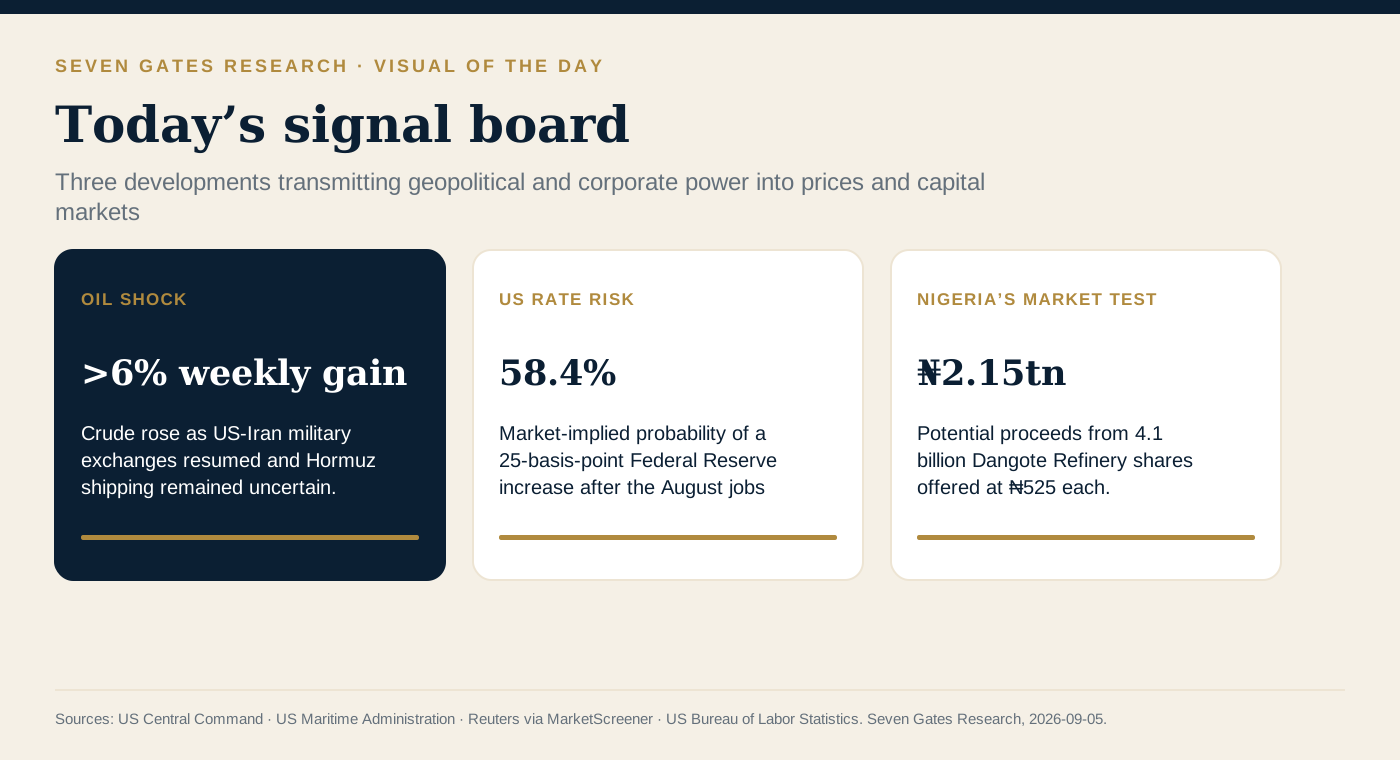
The most important market story is no longer simply whether oil rises or the Federal Reserve tightens. It is that each now reinforces the other. Fighting around the Strait of Hormuz is lifting fuel costs, while resilient US employment gives the Fed room to respond. Elsewhere, Dangote is asking public markets to finance industrial scale, Nvidia is buying the crossroads of open AI, and Washington is attempting another diplomatic circuit between Moscow and Kyiv.
1. Hormuz is becoming a global monetary-policy channel
Renewed US-Iran exchanges have pushed oil more than 6 per cent higher this week, while US diesel prices reached a record. CENTCOM says its latest strikes targeted Iranian radar, maritime and mine-laying capabilities; America’s maritime regulator still describes the risk to commercial shipping as high. The economic damage travels well beyond crude: expensive diesel raises freight, food and industrial costs, complicating efforts by central banks to contain inflation. Nigeria gains potential export revenue and stronger demand for Dangote’s fuels, but households face the less cheerful side of the transmission through transport and pump prices. The uncertainty is considerable because vessels are concealing their movements, making competing claims about actual Hormuz throughput difficult to verify.
Sources: US Central Command · US Maritime Administration · Reuters via MarketScreener
2. America’s jobs rebound has removed the Fed’s cushion
US employers added 162,000 jobs in August, nearly three times the consensus estimate, while unemployment remained at 4.1 per cent. June and July were also revised upwards by a combined 55,000. Markets responded by lifting the implied probability of a quarter-point September rate increase to 58.4 per cent; the two-year Treasury yield rose to 4.37 per cent and equities fell. The report does not settle the decision because August inflation data arrive next week. It does, however, weaken the case for tolerating an energy-driven price shock. A firmer dollar and higher Treasury yields would raise refinancing pressure across emerging markets, including Nigeria, even if elevated oil receipts offer Abuja a partial buffer.
Sources: US Bureau of Labor Statistics · Reuters via MarketScreener · Associated Press
3. Dangote’s IPO will test whether Nigeria can finance industrial ambition at home
Nigeria’s Securities and Exchange Commission has approved Dangote Petroleum Refinery’s public offering: 4.1 billion shares priced at ₦525, implying maximum proceeds of roughly ₦2.15 trillion. The order book is expected to open on 14 September. If fully subscribed, the transaction would be Africa’s largest share sale and a rare chance for Nigeria’s capital market to fund infrastructure of continental significance. It also concentrates several debates in one prospectus: refinery margins during disrupted global supply, access to domestic crude, foreign-currency earnings and the valuation of an asset reportedly built for about $20 billion. Success could deepen the NGX and provide expansion capital. Weak demand would expose the limits of domestic liquidity, however imposing the industrial symbolism.
Sources: Reuters via MarketScreener · Punch Nigeria · Dangote Petroleum Refinery
4. Nvidia is buying the distribution layer of open AI
Nvidia has agreed to acquire Hugging Face for $12.93 billion, moving beyond chips into the platform where developers discover, test and distribute open models. Hugging Face hosts more than three million models and serves over 18 million developers, researchers and creators. Nvidia says the platform will remain open to rival hardware, clouds and frameworks. That promise matters because the acquisition gives the dominant AI accelerator supplier influence over a critical route between model builders and enterprise customers. The strategic logic is formidable: every useful open model can create additional compute demand. The counterweight is trust. Developers and regulators will ask whether an open marketplace can remain genuinely neutral when owned by its most powerful infrastructure vendor.
Sources: Nvidia · Associated Press · Nvidia Newsroom
5. Ukraine diplomacy is restarting under fire
US envoys Steve Witkoff and Jared Kushner are due to meet Vladimir Putin in Moscow before travelling to Kyiv on Sunday, reviving negotiations that had stalled as Washington’s attention shifted to Iran. The diplomatic opening remains narrow. Russia’s publicly stated territorial and NATO demands are unchanged, while overnight Russian attacks killed four people in Ukraine and followed a drone strike on the Ukrainian security service’s headquarters in Kyiv. President Volodymyr Zelenskyy offered to suspend Ukrainian air attacks during the envoys’ travel and called for reciprocal restraint. The trip therefore tests something more basic than the details of a settlement: whether either belligerent is prepared to reduce military pressure long enough for negotiations to acquire substance.
Sources: Office of the President of Ukraine · Associated Press · Reuters via MarketScreener
Three numbers worth remembering
| Number | Why it matters | Source |
|---|---|---|
| 162,000 | US jobs added in August, reviving expectations of a September rate increase. | US Bureau of Labor Statistics |
| ₦2.15tn | Maximum proceeds from the approved Dangote Refinery IPO at ₦525 per share. | Reuters via MarketScreener |
| $12.93bn | Nvidia’s agreed purchase price for Hugging Face, excluding no strategic subtlety whatsoever. | Nvidia |
What could change everything?
- US consumer inflation data on 11 September will probably determine whether the Federal Reserve raises rates at its 15-16 September meeting.
- Verified shipping volumes through Hormuz will show whether the energy shock reflects temporary fear or a durable loss of supply.
- Dangote Refinery’s final prospectus and the 14 September order book will reveal the valuation, allocation and governance terms behind the headline IPO size.
Sources
- US Central Command
- US Maritime Administration
- Reuters via MarketScreener
- US Bureau of Labor Statistics
- Reuters via MarketScreener
- Associated Press
- Reuters via MarketScreener
- Punch Nigeria
- Dangote Petroleum Refinery
- Nvidia
- Associated Press
- Nvidia Newsroom
- Office of the President of Ukraine
- Associated Press
- Reuters via MarketScreener