SEVEN GATES DAILY BRIEF
The Hormuz escalation is testing whether markets have merely priced fear, not disruption
Renewed US-Iran strikes have kept Brent near $95 and revived inflation and rate fears just as Nigeria reports faster growth and AI suppliers show demand is still accelerating.
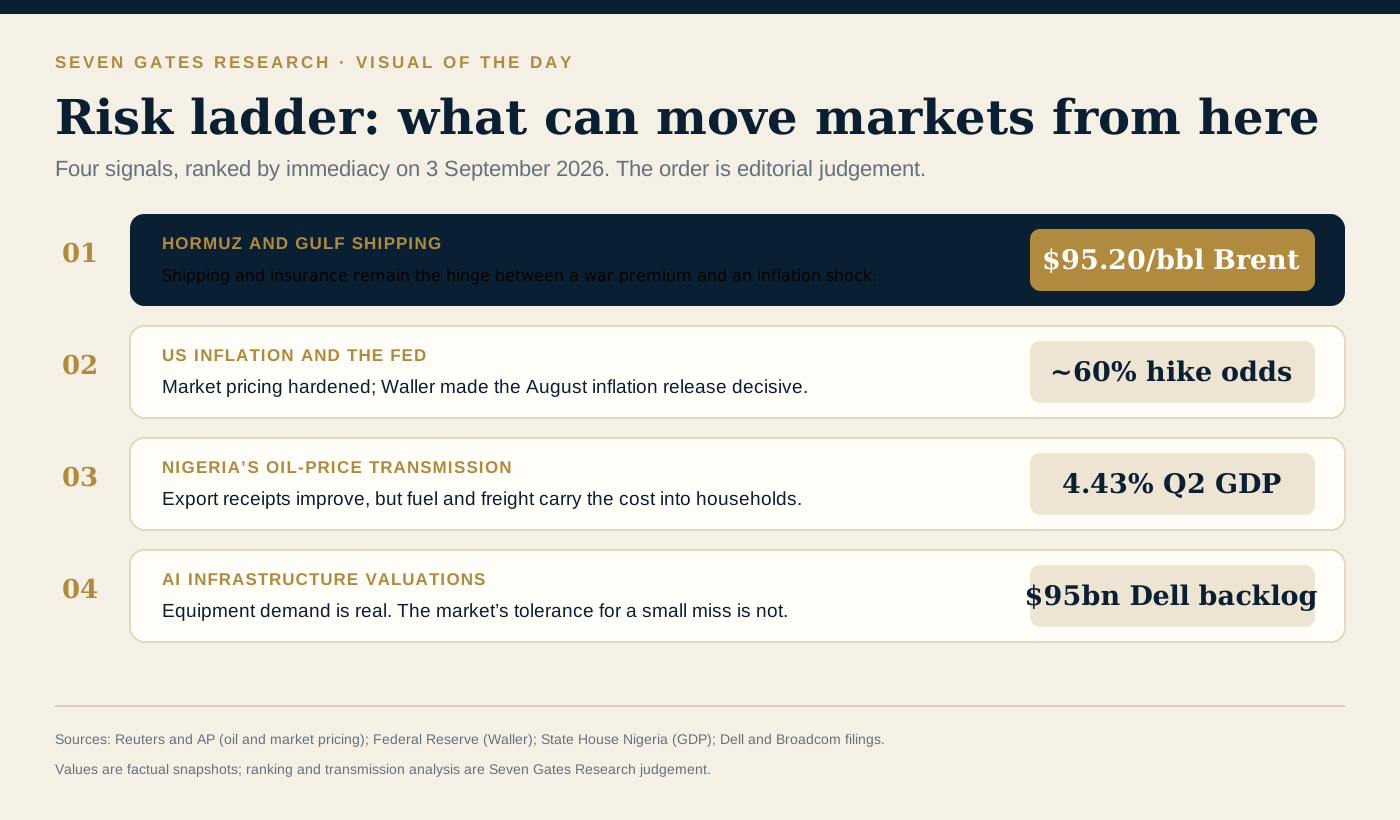
The market’s working assumption remains that the Strait of Hormuz crisis will be contained. That assumption is carrying a great deal: oil near $95 a barrel, a renewed sell-off in government debt, and a Federal Reserve now seen as more likely to tighten again. Nigeria receives a short-term oil-revenue lift, but faces the less cheerful companion of more expensive fuel, freight and imported inputs. Meanwhile, corporate AI demand remains emphatically real, though investors are rediscovering that strong growth can still disappoint an expensive market.
1. The Gulf conflict has become an inflation event, not just a geopolitical headline
The United States and Iran exchanged further strikes after Washington said it had targeted Iranian capabilities linked to mine-laying and missile operations around the Strait of Hormuz. Iran has retaliated against US-aligned Gulf states, while civilian casualties have also been reported, including at a wedding venue struck in Iran. Brent traded around $95.20 a barrel in early dealings, down modestly on the day but still carrying a substantial conflict premium. The central question is no longer whether the confrontation produces alarming footage. It is whether shipping, insurance and physical flows face durable disruption. For Nigeria, higher crude prices improve export receipts and public revenue, but can also intensify petrol, transport and food-price pressures.
Sources: Associated Press, Iran targets Kuwait in retaliation for US bombardments · Reuters, Oil edges down as investors weigh uncertainty over US-Iran strikes
2. Bond markets have steadied, but the Fed is again the world’s rate risk
Global bonds recovered after a bruising sell-off, yet the relief looks tactical rather than conclusive. Markets now place roughly a 60% probability on a Federal Reserve rate increase at the 15-16 September meeting, up from less than 40% a week ago. Governor Christopher Waller said the August US inflation report, due on 11 September, would be decisive for his vote: further cooling could justify holding rates, while a hot reading could warrant an increase. Higher oil prices have made that conditionality more uncomfortable. The transmission to frontier markets is familiar: firmer Treasury yields tighten dollar liquidity, increase external financing costs and raise the hurdle for portfolio flows into Nigeria and peers.
Sources: Reuters, Stocks gain as bonds recover; rising Gulf tensions boost oil · Federal Reserve, Governor Waller on the economic outlook
3. Nigeria’s growth is improving, but the test is whether the financial system can carry it
Nigeria’s economy expanded 4.43% year on year in the second quarter, up from 4.23% a year earlier. That is a meaningful improvement in the macro story, particularly after years in which growth repeatedly failed to outrun population pressures. But the next phase is institutional rather than statistical. The Securities and Exchange Commission has issued draft rules for online foreign-exchange and contracts-for-difference trading, extending its reach to offshore platforms targeting Nigerian residents and requiring a clearer regulatory perimeter. The rules matter because retail speculation, capital flight anxieties and digital-market growth now collide in the same mobile phone. Growth figures are welcome; credible market plumbing is what turns them into investable confidence.
Sources: State House, Abuja, second-quarter GDP release · Securities and Exchange Commission Nigeria, proposed rules on online forex trading and contracts for difference
4. AI infrastructure demand is still roaring, but the valuation test has become unforgiving
Dell has provided unusually forceful evidence that corporate AI spending is translating into equipment orders. Its fiscal second-quarter revenue rose 58% year on year to $47 billion, AI-server orders reached $60.9 billion and the company exited the quarter with a $95 billion AI-server backlog. Dell raised its full-year revenue outlook by $25 billion to $192 billion. Yet Broadcom’s shares fell after it issued fourth-quarter revenue guidance that missed investors’ elevated expectations, despite reporting very rapid AI semiconductor growth. The paired results sharpen the point: the AI build-out remains an industrial investment cycle, not simply a narrative. But after the rerating in technology equities, good results no longer guarantee a good share-price response. Expectations have acquired their own electricity bill.
Sources: Dell Technologies, second-quarter fiscal 2027 results · Broadcom, third-quarter fiscal 2026 results · Reuters, market reaction to Broadcom guidance
Three numbers worth remembering
| Number | Why it matters | Source |
|---|---|---|
| $95.20/bbl | Brent crude in early 3 September trading, reflecting a persistent war premium despite a modest daily retreat. | Reuters |
| 60% | Approximate market-implied probability of a Federal Reserve rate increase at the 15-16 September meeting. | Reuters |
| 4.43% | Nigeria’s real GDP growth rate in the second quarter of 2026, year on year. | State House, Abuja |
What could change everything?
- Any sustained impairment to Hormuz shipping would turn today’s oil premium into a broader inflation and balance-of-payments shock.
- The US inflation release on 11 September is the immediate test of whether the Fed can hold rates or must respond to renewed price pressure.
- Nigeria’s stronger output data will matter politically and economically only if it improves real incomes, investment conditions and the cost of moving goods.
Sources
- Associated Press, Iran targets Kuwait in retaliation for US bombardments
- Reuters, Oil edges down as investors weigh uncertainty over US-Iran strikes
- Reuters, Stocks gain as bonds recover; rising Gulf tensions boost oil
- Federal Reserve, Governor Waller on the economic outlook
- State House, Abuja, second-quarter GDP release
- Securities and Exchange Commission Nigeria, proposed rules on online forex trading and contracts for difference
- Dell Technologies, second-quarter fiscal 2027 results
- Broadcom, third-quarter fiscal 2026 results